
NC DUI Reinstatement for Students: Court vs DMV Timing Traps
Free to compare
Why Your Court Clearance Doesn't Automatically Restore Your NC License
North Carolina runs two parallel reinstatement tracks after a DWI conviction: the judicial system processes your court-ordered obligations, and NCDMV processes your administrative license revocation. Completing one does not satisfy the other. Your court file closing does not trigger an automatic DMV update.
Most college students finish their DWI Assessment (ADET substance abuse evaluation), pay court fines, and complete community service—then assume their license is immediately eligible for reinstatement. NCDMV won't process your reinstatement application until all court compliance records post to their system, which typically takes 10-14 business days after your final court payment or program completion. File for reinstatement before that window closes and DMV rejects your application, forcing you to restart the process.
The gap exists because North Carolina courts submit compliance records to DMV in batch uploads, not real-time. Your court clerk marks your case closed on their docket, but that status change must export to NCDMV's database before reinstatement staff can verify completion. Students who drive to campus assuming they're cleared the day after their final court date risk operating while revoked charges—a separate criminal offense carrying up to 12 months additional revocation under N.C.G.S. § 20-28.
The 45-Day Hard Suspension Period Before Limited Driving Privilege Eligibility
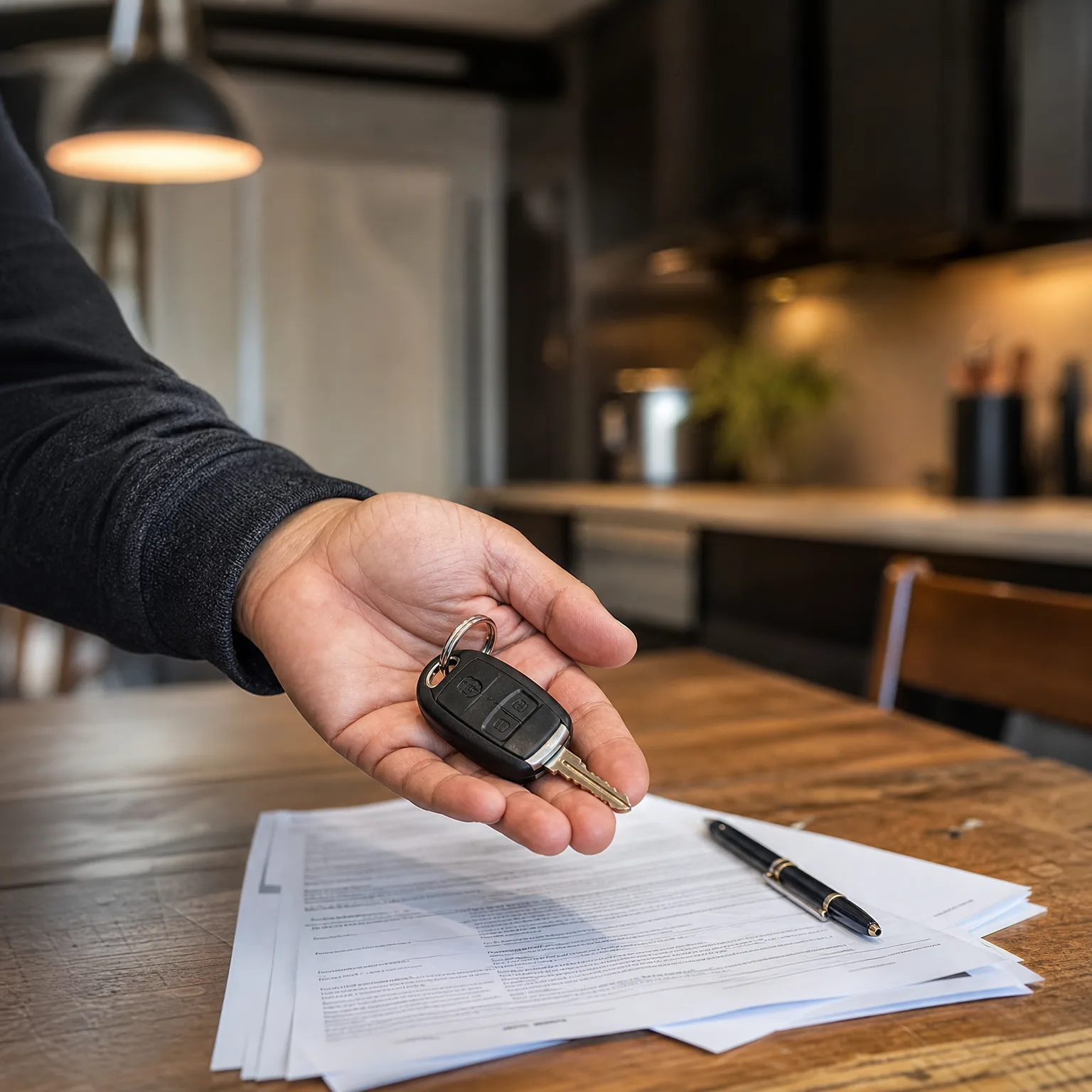
North Carolina law mandates a 45-day hard suspension before any DWI offender can petition for a Limited Driving Privilege (LDP)—the state's version of a hardship license. This period begins the date your civil revocation takes effect (typically 10 days after your DWI arrest under G.S. 20-16.5) or your conviction date, whichever creates the longer total suspension.
College students frequently miscalculate this window. If you were arrested September 1st and convicted November 15th, your 45-day hard period started September 11th (10 days post-arrest when the civil revocation took effect), not your conviction date. You became LDP-eligible October 26th. Filing your LDP petition October 20th gets denied, wasting your $100 court filing fee and forcing you to refile.
The hard suspension applies regardless of your BAC level, prior record, or student status. No exceptions exist for academic schedules, clinical rotations, or student teaching placements. Plan your fall and spring semester course loads around this reality—if your conviction lands mid-semester, you'll lose 45 days of unrestricted driving even if you qualify for an LDP afterward.

Limited Driving Privilege Requirements: What Courts Actually Approve for Students
North Carolina LDPs are court-issued, not DMV-issued. You file a petition with the district or superior court that handled your DWI case, and a judge determines whether to grant restricted driving privileges. The petition must document specific approved routes and times: home to campus, campus to part-time job, home to court-ordered treatment, and religious activities.
Judges deny petitions when students request vague coverage like "anywhere within a 25-mile radius for school and work." Your petition must list exact addresses—your apartment complex, your university's parking lot, your employer's street address, your ADET program facility—and proposed travel windows matched to class schedules and work shifts. Most Wake County and Mecklenburg County judges require employer verification letters on company letterhead and current class schedules printed from your university portal.
General social driving, Greek life events, spring break trips, and weekend visits home are not approved LDP purposes. If campus is 90 miles from your family's home, your LDP won't cover that route unless you can document a specific approved purpose (medical appointments, court dates) at the destination. Violating LDP route or time restrictions triggers immediate revocation and adds up to 12 months to your total suspension period under N.C.G.S. § 20-179.3(e).
Ignition Interlock Device Installation: When It's Required and What It Costs
North Carolina mandates ignition interlock devices for all LDP holders whose BAC measured 0.15 or higher at the time of arrest, and for anyone with a prior DWI conviction regardless of BAC. The device must be installed before you can legally drive under your LDP—petition approval alone doesn't authorize driving until your IID provider submits installation verification to DMV.
Installation costs $75-$150 depending on provider, plus $60-$90 monthly monitoring fees. Most college students choose providers near campus (Charlotte, Raleigh, Greensboro, Durham have multiple certified installers), but you cannot switch providers mid-compliance without court approval. Your IID monitors every ignition attempt, records violations (failed breath tests, tampering, missed rolling retests), and uploads reports to DMV monthly.
If you share an apartment and your roommate drives your car while you're in class, their failed breath test posts to your compliance record. DMV doesn't distinguish between drivers—the device is tied to the vehicle, not the individual. Three violations in any 12-month period trigger automatic LDP revocation. Students living on-campus without reliable vehicle access sometimes fare better with non-owner SR-22 policies and rideshare arrangements than managing IID compliance while parking in campus deck overnight.

Line Up Coverage Before Your License Comes Back
Get Back on the Road
SR-22 Filing Timing: Why Filing Before Court Clearance Posts Fails
North Carolina requires continuous SR-22 filing for 3 years following DWI reinstatement, measured from your conviction date. Your insurance carrier files the SR-22 certificate with NCDMV electronically, but DMV won't accept the filing until your court compliance records post to their system and your suspension status changes to "eligible for reinstatement."
Most students buy SR-22 coverage immediately after conviction, file the certificate, then discover weeks later that DMV rejected it because court records hadn't posted yet. The rejection doesn't notify you directly—your carrier receives the error code, and many don't proactively alert customers. You assume you're compliant while DMV shows no valid SR-22 on file.
The correct sequence: (1) complete all court-ordered obligations (ADET assessment, fines, community service, DWI education classes), (2) wait 10-14 business days for court records to post to NCDMV, (3) verify your DMV record shows "eligible for reinstatement" status via myNCDMV.gov portal, (4) purchase SR-22 policy and file certificate, (5) pay reinstatement fees and apply for license restoration. Filing SR-22 in week one adds zero value—you'll refile the same certificate in week three after court clearance posts.

What Reinstatement Actually Costs and What Happens If You Miss Deadlines
North Carolina charges a $65 base reinstatement fee after DWI revocation, separate from court fines and SR-22 insurance premiums. If your revocation included failure to maintain insurance (common when students drop coverage during suspension, not realizing NC requires continuous coverage even while revoked), add $50 FS-1 revocation reinstatement fee and $50 license plate restoration fee.
Total out-of-pocket before you drive again: $65-$165 DMV fees, $75-$150 IID installation (if required), $60-$90/month IID monitoring (if required), $40-$80/month SR-22 insurance premium increase over standard liability rates, $100 LDP court petition fee (if seeking restricted privileges before full reinstatement). Budget $500-$800 in first-month costs for full reinstatement with IID, or $200-$300 for LDP petition with non-owner SR-22.
Missing your SR-22 renewal date during the 3-year filing period triggers automatic re-suspension. Your carrier must maintain continuous filing—any lapse, even one day, generates an FS-1 revocation notice from DMV. Most lapses happen when students graduate, move out of state for grad school or jobs, and forget to update their carrier with forwarding addresses. The renewal notice goes to your old campus apartment, you miss it, your policy cancels for non-payment, and DMV revokes your license 30 days later. Reinstatement after SR-22 lapse requires paying the full $65 reinstatement fee again plus new FS-1 penalties.
How Moving Out of State Mid-Suspension Affects Your NC Reinstatement
Relocating to another state for graduate school, internships, or post-graduation employment does not erase your North Carolina DWI revocation. NC participates in the Driver License Compact—your suspension follows you to 44 other member states. When you apply for a new license in your destination state, their DMV queries the national database, discovers your NC revocation, and denies your application until you clear the North Carolina hold.
You must complete NC reinstatement requirements even if you no longer live in the state. That means maintaining SR-22 filing with a carrier licensed in North Carolina (many national carriers can maintain your NC SR-22 while you hold an out-of-state license, but verify before relocating), completing any remaining ADET or IID compliance from your new address, and paying NC reinstatement fees through myNCDMV.gov or by mail.
Your NC LDP does not transfer to other states. If you're granted an LDP for limited driving in Raleigh but accept a job in Virginia, the LDP authorizes driving only within the routes and times specified in your North Carolina court order—it carries no legal weight in Virginia. Most students in this situation complete NC reinstatement remotely, obtain full NC license restoration, then transfer to their new state's license within 30-60 days of establishing residency.
Frequently Asked Questions
Can I drive to class while waiting for my NC DWI reinstatement to process?
No. Your license remains revoked until NCDMV processes your reinstatement application and issues confirmation. Driving before reinstatement completes is operating while revoked under N.C.G.S. § 20-28, a separate criminal charge carrying up to 12 months additional suspension. Verify your license status shows "valid" on myNCDMV.gov before driving.
Does my university parking pass count as proof I need a Limited Driving Privilege?
No. North Carolina judges require employer verification letters for work routes and current class schedules for academic routes. A parking pass shows you have campus parking access but doesn't document specific travel needs, class times, or approved LDP purposes. Attach your semester schedule printed from your university portal and any part-time job offer letter to your LDP petition.
What happens if I test positive for alcohol on my ignition interlock device at a tailgate?
Any failed breath test—regardless of whether you attempt to start the car—uploads to NCDMV as a violation. Three violations in 12 months trigger automatic LDP revocation. The device logs failed tests, missed rolling retests, and tampering attempts. Your compliance report doesn't distinguish between "I was sitting in a parked car" and actual driving attempts.
Can I get financial aid or a student loan to cover NC DWI reinstatement costs?
Federal student aid cannot be used for legal fees, fines, or insurance premiums—only qualified education expenses. Some students negotiate payment plans with ADET providers for substance abuse assessments (typically $100-$400) or arrange installment agreements with their court clerk for fines exceeding $500. SR-22 premiums and IID costs must be paid monthly out-of-pocket.
Will my NC DWI revocation show up when I apply for grad school in another state?
Most graduate programs do not run driving record checks, but professional licensing boards do. If you're pursuing nursing, education, law, social work, or any field requiring state licensure, your DWI conviction and license revocation will appear on criminal background checks and DMV record reviews required for licensure applications. Completion of reinstatement and compliance with all court orders demonstrates rehabilitation to licensing boards.
How do I prove to NCDMV that I completed my court-ordered ADET program?
Your ADET provider submits completion records electronically to NCDMV, but batch uploads typically take 10-14 business days. Request a stamped certificate of completion from your provider when you finish your final session. If DMV shows no record of completion after two weeks, contact your provider to verify they submitted your file—administrative errors happen, and you're responsible for confirming your compliance posted correctly.
Can I petition for an LDP before my 45-day hard suspension ends if I have a clinical rotation starting?
No. N.C.G.S. § 20-179.3 mandates the full 45-day hard suspension before any LDP eligibility, with no exceptions for academic schedules, student teaching placements, or clinical rotations. Courts cannot waive or shorten the 45-day period regardless of your circumstances. Plan your course load and clinical placements around this mandatory waiting period—filing early wastes your petition fee.
Related Articles

NC Warrant Clearance: Court vs DMV Reinstatement Timing
5/3/2026

NC CDL Reinstatement After DUI: Court & DMV Timing
5/3/2026

ND DUI Reinstatement: Court Clearance & DMV Timing
5/3/2026

NC Insurance Lapse: Court & DMV Clearance Timing
5/3/2026
NC Warrant Suspension: Full Reinstatement Cost Stack
5/3/2026
NC Child Support Reinstatement: Court & DMV Timing Gap
5/3/2026