
NC DUI CDL Reinstatement: The Real Cost Stack Nobody Breaks Down
Free to compare
The Three-Gate Fee Structure North Carolina Doesn't Warn You About
North Carolina CDL holders face a mandatory three-part payment structure after a DUI suspension that operates independently at each agency. The DMV charges $130 for license restoration after your suspension period ends, which covers administrative processing but does not include your SR-22 filing requirement. Your insurance carrier adds $25-$50 for SR-22 form submission, then increases your annual premium by 60-110% for the three-year filing period North Carolina mandates after DUI convictions.
The third gate catches most drivers off guard: federal DOT medical recertification. North Carolina won't restore your CDL privileges until you submit a current DOT medical examiner's certificate, which costs $80-$150 depending on the provider and requires clearance from the examining physician. If your DUI involved a BAC above 0.15 or resulted in court-ordered substance abuse treatment, FMCSA regulations require additional clearance documentation from a substance abuse professional before the medical examiner will certify you—adding another $200-$400 to your total.
Most Charlotte and Raleigh drivers budget for the DMV fee and SR-22 filing, then discover the medical recertification requirement when they attempt to schedule their reinstatement appointment. The DMV will not process your restoration application without proof of current medical certification on file, which means waiting another 2-4 weeks if you haven't scheduled the exam in advance.

What the $130 DMV Restoration Fee Actually Covers
North Carolina's $130 restoration fee applies to all license reinstatements following DUI suspensions, regardless of whether you hold a Class A, B, or C CDL. This is a flat administrative charge that covers processing your reinstatement application, updating your driving record to active status, and issuing your new credential. The fee does not reduce based on suspension length or clean record history.
The restoration fee is separate from and in addition to any court fines, DWI traffic school costs, or substance abuse assessment fees you paid during your suspension period. Payment must be submitted at the time you file your reinstatement application at a North Carolina DMV office—personal checks are not accepted for restoration fees. You'll need a money order, cashier's check, or debit/credit card.
North Carolina does not offer payment plans for the restoration fee itself, but the DMV will allow you to pay this fee before you complete your SR-22 filing or medical recertification. Some drivers pay the restoration fee early to lock in their application date, then complete the insurance and medical requirements within the 30-day processing window.

SR-22 Carrier Markup: Filing Fees Plus Three Years of Premium Increase
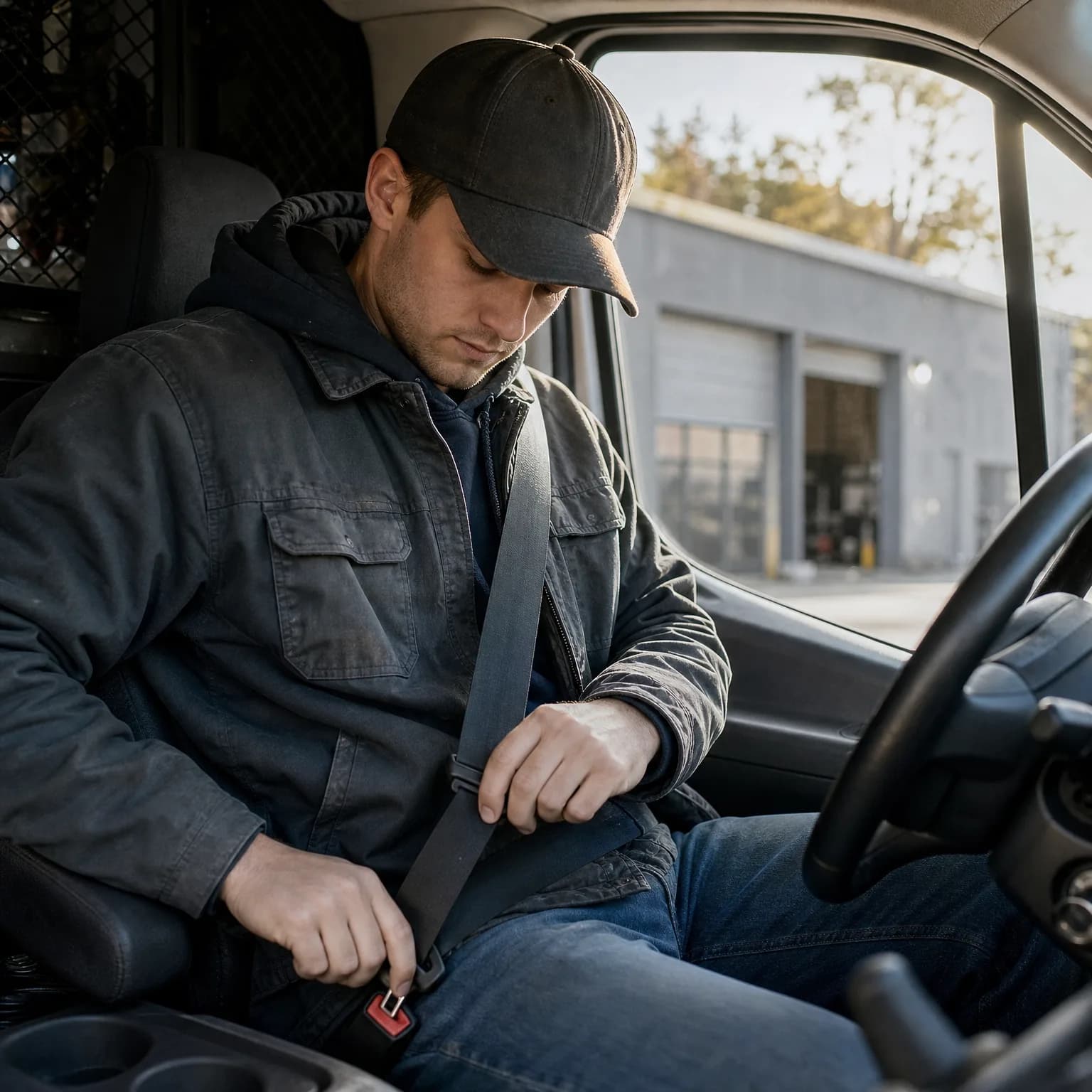
North Carolina requires SR-22 filing for three years following a DUI conviction, measured from your conviction date, not your reinstatement date. Most carriers charge $25-$50 for the initial SR-22 form submission, which is a one-time administrative fee paid when your insurer files the certificate with the North Carolina DMV on your behalf.
The larger cost is the premium increase that follows. CDL holders convicted of DUI in a personal vehicle see annual premium increases of 60-110% depending on the carrier, your prior driving history, and whether your BAC exceeded 0.15. A driver paying $1,200 annually before the DUI can expect premiums between $1,920 and $2,520 per year for the three-year SR-22 filing period—a total increase of $2,160 to $3,960 over baseline.
If you drove commercially at the time of your DUI or your conviction involved a commercial vehicle, most standard carriers will not renew your policy. You'll need a non-standard or high-risk carrier that specializes in CDL reinstatements, which typically charge 90-140% above standard market rates. Budget $2,400-$3,600 annually for SR-22-compliant coverage in this scenario.
North Carolina allows you to satisfy the SR-22 requirement with a non-owner policy if you no longer own a vehicle, but most non-owner SR-22 policies exclude commercial driving coverage. If you plan to return to commercial driving, you'll need an SR-22 policy that includes hired and non-owned auto liability coverage, which costs more than a standard non-owner policy.
Federal Medical Recertification Costs and Clearance Requirements
North Carolina requires all CDL holders to maintain a current DOT medical examiner's certificate on file with the DMV, and your certificate is automatically invalidated when your license is suspended. Before the DMV will restore your CDL, you must submit proof of a new medical certification conducted after your suspension ended.
A standard DOT physical examination costs $80-$150 depending on the clinic and your location. Greensboro, Charlotte, and Raleigh have multiple certified medical examiners; rural counties may have fewer options and slightly higher costs. The exam includes vision, hearing, blood pressure, urinalysis, and a medical history review.
If your DUI conviction involved a BAC of 0.15 or higher, or if you were ordered to complete substance abuse treatment as part of your sentencing, FMCSA regulations require additional documentation before the medical examiner can certify you. You'll need a substance abuse professional evaluation and clearance letter, which costs $200-$400 depending on the provider. The SAP must confirm you completed all court-ordered treatment, passed follow-up testing, and are cleared to return to safety-sensitive functions under DOT guidelines.
Most North Carolina drivers miss this requirement because the DMV reinstatement notice does not specify the SAP clearance step—it only states that you need a current medical certificate. The medical examiner discovers the gap during your physical and refers you to an SAP, adding 3-6 weeks to your reinstatement timeline if you haven't scheduled the evaluation in advance.

Line Up Coverage Before Your License Comes Back
Get Back on the Road
Coordinating Payment Timing to Avoid Double Delays
North Carolina's reinstatement process does not require you to pay all three fees simultaneously, but poor sequencing creates delays. The most efficient order: schedule your DOT medical exam and SAP evaluation first, then obtain SR-22 filing from your carrier, then submit your DMV restoration application with all supporting documentation.
If you pay the DMV restoration fee before securing your medical certificate, the DMV will accept your application but place it on hold until you submit proof of certification. Your 30-day processing window does not pause during this hold, which means you may need to resubmit documentation or schedule a second appointment if you miss the deadline.
If you obtain SR-22 filing before completing your medical recertification, your carrier will file the certificate with the DMV, but the DMV will not activate your reinstatement until the medical documentation clears. You'll pay for SR-22 coverage during this gap without being able to drive, which extends your total filing period unnecessarily.
The cleanest sequence: complete your DOT physical and SAP clearance, receive your medical certificate, then contact your carrier to initiate SR-22 filing. Once your carrier confirms the SR-22 is filed with the state, visit the DMV with your medical certificate, SR-22 confirmation, and payment for the restoration fee. This approach compresses your out-of-pocket timeline to 2-4 weeks instead of 6-8 weeks.

What Happens If You Return to Commercial Driving
North Carolina does not require separate CDL reinstatement fees beyond the standard $130 restoration charge, but your employer's insurance carrier may impose additional requirements. Most trucking companies and fleet operators require their own medical clearance process, background check, and road test before allowing a driver with a DUI conviction to operate commercially, even after state reinstatement is complete.
Your employer's carrier may also require higher liability limits than the SR-22 minimum. North Carolina's SR-22 filing requirement mandates 30/60/25 liability coverage, but most commercial operators require 100/300/100 or higher for CDL holders returning from a DUI suspension. Expect your employer to verify your SR-22 status directly with your carrier before clearing you to drive.
If you plan to work as an owner-operator or drive under your own authority, you'll need commercial auto liability coverage that satisfies both North Carolina's SR-22 filing requirement and FMCSA's minimum liability thresholds. This typically costs $4,500-$8,000 annually for a single-truck operation, depending on your cargo type, radius, and claims history.
Coverage That Meets North Carolina's SR-22 Requirement Without Overpaying
North Carolina allows you to satisfy the three-year SR-22 filing requirement with liability-only coverage if you own a vehicle, or with a non-owner SR-22 policy if you do not. Non-owner policies cost less but exclude coverage when you drive a vehicle you own or operate commercially.
If you plan to return to CDL work, you need a policy that includes hired and non-owned auto liability coverage, which extends your SR-22 filing to vehicles you operate for work but do not own. Most non-standard carriers offer this as an add-on to a standard non-owner policy, but not all high-risk carriers write this coverage in North Carolina—ask specifically whether hired auto liability is included.
Compare quotes from at least three carriers that specialize in post-DUI CDL reinstatements. Standard-market carriers like State Farm and Allstate rarely offer competitive rates for SR-22 filers with CDL endorsements; non-standard carriers like Bristol West, The General, and Progressive's non-standard division write this coverage routinely and price it more accurately.
Frequently Asked Questions
Can I get my CDL back in North Carolina if I lost it for a DUI in my personal vehicle?
Yes, North Carolina will restore your CDL after you complete your suspension period, submit proof of SR-22 filing, pass a new DOT medical exam, and pay the $130 restoration fee. If your DUI involved a BAC above 0.15 or court-ordered treatment, you'll also need clearance from a substance abuse professional before the medical examiner will certify you.
How long does North Carolina require SR-22 filing after a DUI for CDL holders?
North Carolina requires three years of continuous SR-22 filing after a DUI conviction, measured from your conviction date. If your SR-22 lapses at any point during this period, the DMV suspends your license again and the three-year clock restarts from the date you refile.
Do I need a DOT physical to reinstate my CDL in North Carolina even if my medical certificate hasn't expired?
Yes, your DOT medical certificate is automatically invalidated when your CDL is suspended in North Carolina. You must complete a new DOT physical exam after your suspension ends and submit the updated certificate to the DMV before they will process your reinstatement application.
Can I use a non-owner SR-22 policy to reinstate my CDL in North Carolina?
Yes, but most non-owner SR-22 policies exclude commercial driving coverage. If you plan to return to CDL work, you need a non-owner policy with hired and non-owned auto liability coverage, which extends your SR-22 filing to vehicles you operate for work.
What happens if I can't afford the $130 restoration fee and SR-22 insurance at the same time?
North Carolina does not offer payment plans for the restoration fee, but you can pay the fee and submit your reinstatement application before completing your SR-22 filing. The DMV will hold your application for up to 30 days while you secure coverage, but you must submit proof of SR-22 filing within that window or your application expires.
Will my trucking company's insurance cover me after a DUI reinstatement in North Carolina?
Most trucking companies require their own clearance process, background check, and road test before allowing a driver with a DUI conviction to operate commercially, even after state reinstatement is complete. Your employer's carrier may also require higher liability limits than North Carolina's SR-22 minimum.
How much does substance abuse professional clearance cost in North Carolina for CDL reinstatement?
SAP evaluations cost $200-$400 in North Carolina depending on the provider. You need this clearance only if your DUI involved a BAC above 0.15 or if you were court-ordered to complete substance abuse treatment as part of your sentencing.
Related Articles
NC DUI Reinstatement Costs: Full Stack for Parents
5/3/2026

NC DUI Reinstatement for Rideshare: Real Cost Stack
5/3/2026

Reinstate DUI License in Charlotte: SR-22 & Interlock Steps
4/29/2026

North Dakota CDL DUI Reinstatement Costs | Full Stack
5/3/2026

NC DUI Reinstatement Cost Stack for Students
7/13/2026

NC CDL Unpaid Tickets Reinstatement: True Cost Stack
5/3/2026