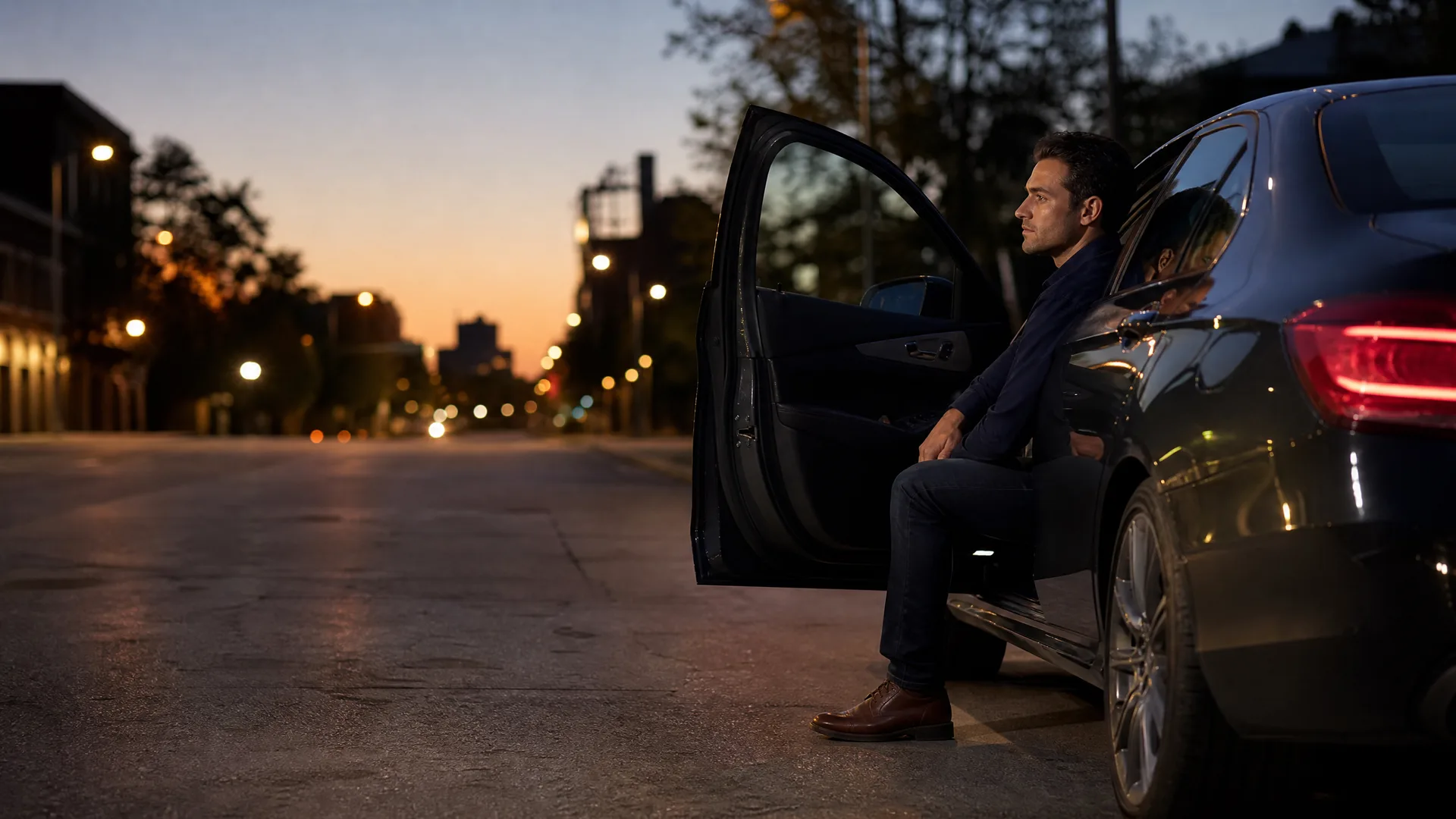
Reinstating a DUI Suspension in Nevada: Rideshare Drivers and Court Clearance Timing
Free to compare
Why Nevada's Court-to-DMV Clearance Gap Delays Rideshare Reinstatement
Nevada operates separate criminal court and DMV administrative tracks for DUI cases. Your court completes sentencing requirements — DUI school, community service, fines — but that completion doesn't transmit to Nevada DMV automatically. Most rideshare drivers assume court clearance equals DMV clearance and file SR-22 immediately, then discover DMV shows their case as still open when Uber or Lyft run background verification.
The delay is structural. Nevada courts submit completion notices to DMV electronically, but processing typically takes 30-45 days from your final court date. During that window, your DMV record shows the suspension as unresolved even though you've satisfied all court obligations. File SR-22 and apply for restricted license reinstatement before DMV updates, and the system rejects your application because DMV's database doesn't reflect court compliance yet.
Rideshare platforms verify your Nevada DMV driving record directly — not court records. Lyft and Uber background check systems pull current DMV status. If DMV shows an open DUI administrative action when you apply to drive, you're denied regardless of what your court paperwork says. This creates a catch-22: you need DMV clearance to activate on a rideshare platform, but DMV won't process your reinstatement until court records sync, and you can't accelerate that sync.
The Three-Agency Coordination Sequence Nevada Rideshare Drivers Must Follow
Reinstatement for rideshare driving requires coordinating Nevada courts, Nevada DMV, and your TNC platform's background check provider in this specific order. First: complete all court-ordered DUI requirements and obtain written confirmation from the court clerk that your case shows full compliance. Request a certified completion notice — this is a physical or emailed document stamped by the court, not just an assumption that you've finished.
Second: wait for DMV to receive and process the court's electronic submission. Call Nevada DMV's Administrative Per Se unit at (775) 684-4368 and provide your driver's license number. Ask whether court completion has posted to your DMV file. Do not proceed to SR-22 filing until DMV confirms receipt. This prevents the 30-45 day processing gap that causes rideshare background check failures.
Third: after DMV confirms court clearance, file SR-22 through a Nevada-authorized insurer and apply for restricted license reinstatement. Nevada requires ignition interlock device installation before restricted license issuance for DUI cases under NRS 483.490. Schedule IID installation, obtain the installation certificate, then submit SR-22 proof and IID verification to DMV simultaneously. Only after DMV issues your restricted license should you apply to reactivate on Lyft or Uber — the TNC background check will now show an active valid Nevada license instead of an open suspension.

What Nevada's Restricted License Allows for Rideshare Drivers
Nevada's restricted license for DUI cases permits driving to and from work, school, medical appointments, and court-ordered programs. Rideshare driving qualifies as work under Nevada DMV interpretation, but the restricted license documentation must explicitly list rideshare driving as an approved purpose. When you apply for the restricted license at a Nevada DMV office, bring proof of your Lyft or Uber account and state that rideshare driving is your employment.
The restricted license is conditioned on ignition interlock device use. You must install an IID on any vehicle you operate, including vehicles you use for rideshare. Nevada-approved IID providers include LifeSafer, Intoxalock, Smart Start, and Guardian Interlock. Installation costs $70-$150, plus monthly monitoring fees of $60-$90. The IID requirement runs for the duration of your restricted license period — typically the remainder of your suspension after the 45-day hard suspension for first-time DUI.
Uber and Lyft do not prohibit drivers with restricted licenses in Nevada, but both platforms require that your restricted license show no driving-hour limitations and that you disclose IID installation. Some rideshare passengers may notice the device. Nevada law prohibits discrimination based on IID presence, but platforms reserve the right to deactivate drivers based on passenger complaints unrelated to the legal status of your license.
SR-22 Filing Requirements and Duration for Nevada Rideshare Drivers
Nevada requires SR-22 filing for 3 years following DUI conviction. The filing period begins on your conviction date, not your reinstatement date or your restricted license issue date. This means if your court case resolved 6 months ago and you're only now reinstating, you have 2.5 years of SR-22 obligation remaining — not a full 3 years from today.
SR-22 is a certificate of financial responsibility filed electronically by your insurer to Nevada DMV. Filing fees range from $15-$35 depending on carrier. The SR-22 itself is not insurance — it's proof you carry at least Nevada's minimum liability coverage: $25,000 bodily injury per person, $50,000 bodily injury per accident, $20,000 property damage. If you own a vehicle, you need a standard auto policy with SR-22 endorsement. If you don't own a vehicle but plan to drive for rideshare using a platform-provided or rental vehicle, you need a non-owner SR-22 policy.
Non-owner SR-22 policies cover you when driving vehicles you don't own. Monthly premiums for non-owner SR-22 in Nevada after DUI typically run $85-$140, depending on your age, conviction details, and county. Estimates based on available industry data; individual rates vary. Carriers offering non-owner SR-22 in Nevada include The General, Direct Auto, Bristol West, and National General. Let any SR-22 policy lapse during the 3-year period and Nevada DMV suspends your license again immediately, triggering a new reinstatement cycle.

Line Up Coverage Before Your License Comes Back
Get Back on the Road
TNC Background Check Timing and What Shows on Your Nevada DMV Record
Uber and Lyft conduct background checks through third-party vendors — Checkr for Uber, Sterling for Lyft as of current platform practice. These vendors pull your Nevada DMV driving record directly from state databases, not from court records or insurance filings. What matters is what your Nevada DMV Motor Vehicle Record shows at the moment the background check runs.
A DUI conviction remains visible on your Nevada MVR for 7 years from conviction date. The conviction itself doesn't disqualify you from rideshare driving in Nevada — both Uber and Lyft permit drivers with one DUI conviction older than 7 years, and some market areas permit drivers with convictions between 3-7 years old depending on local regulatory requirements. What disqualifies you is an active suspension or an MVR showing unresolved administrative actions.
Before you apply to reactivate on a rideshare platform, request your own Nevada DMV driving record at dmvnv.com or by visiting a DMV office in person. Verify that the record shows: no active suspension, restricted license status with valid expiration date, no pending administrative holds, and SR-22 on file. If any of these elements are missing or show incorrect data, contact Nevada DMV's Administrative Per Se unit to resolve before submitting a TNC background check application. A background check denial stays on your TNC account for 12 months in most cases, delaying your ability to drive even after DMV corrects the error.
Cost Breakdown for Nevada DUI Reinstatement as a Rideshare Driver
Reinstating a Nevada DUI suspension and resuming rideshare work requires budgeting for reinstatement fees, SR-22 insurance, ignition interlock, and DUI school completion. Nevada DMV charges a $35 base reinstatement fee after administrative per se DUI suspension. Court-ordered reinstatement fees may differ and are paid separately to the court clerk, not DMV.
SR-22 filing through your insurer costs $15-$35 one-time. The underlying insurance policy is the recurring cost: $85-$140/month for non-owner SR-22, or $180-$280/month for standard auto SR-22 if you own the vehicle you'll use for rideshare. Multiply by 36 months for total SR-22 insurance obligation. Ignition interlock installation runs $70-$150 plus $60-$90/month monitoring for the duration of your restricted license period.
Nevada-approved DUI education programs cost $150-$300 depending on provider and whether you're classified as first-time or repeat offender. Victim impact panels required by some courts add $50-$75. Total upfront costs to reinstate and resume rideshare driving in Nevada: approximately $1,200-$2,000 in the first 90 days, plus ongoing monthly SR-22 and IID costs. Estimates based on available industry data; individual results vary.
What to Do If Your Rideshare Background Check Fails After Nevada Reinstatement
Background check denials after reinstatement usually trace to one of three causes: DMV records haven't updated to reflect your restricted license, SR-22 filing shows as lapsed or not on file, or your IID provider hasn't transmitted compliance data to DMV. Start by requesting your Nevada DMV driving record and comparing it to what you expected based on your reinstatement documents.
If your MVR shows incorrect data, visit a Nevada DMV office in person with your restricted license, SR-22 proof of filing from your insurer, and IID installation certificate. DMV staff can manually verify SR-22 status and IID compliance in real time and update your record if discrepancies exist. Correcting records online or by phone often takes weeks; in-person resolution is faster when rideshare reactivation timing matters.
If your MVR is correct but the TNC background check still denied you, request a copy of the background check report from the vendor. Federal law requires background check companies to provide you a copy of any report used to deny employment or contracting opportunities. Review the report for factual errors — wrong conviction dates, incorrect suspension status, or confusion between administrative and criminal case records. Dispute errors directly with the background check vendor in writing, attaching your current Nevada MVR and restricted license as evidence. Most TNC platforms allow one background check appeal per 12-month period.
Frequently Asked Questions
Can I drive for Uber or Lyft in Nevada with a restricted license after a DUI?
Yes, Nevada's restricted license permits rideshare driving as employment if you list it as an approved purpose on your application. You must install an ignition interlock device on any vehicle you operate, file SR-22 proof of insurance, and complete the 45-day hard suspension before restricted license eligibility. Both Uber and Lyft accept restricted licenses in Nevada as long as your DMV record shows no active full suspension and your IID installation is documented.
How long does it take for Nevada court DUI completion to show on my DMV record?
Nevada courts transmit DUI case completion to DMV electronically, but processing typically takes 30-45 days from your final court date. Your DMV record won't reflect court compliance immediately, even if you have written confirmation from the court clerk. Call Nevada DMV's Administrative Per Se unit at (775) 684-4368 to verify whether court clearance has posted before you file SR-22 or apply for restricted license reinstatement.
What happens if I file SR-22 in Nevada before DMV receives my court clearance?
DMV will reject your restricted license application because their system shows your DUI case as unresolved, even though you've completed all court requirements. This delays reinstatement by another 30-45 days while you wait for court records to sync. Rideshare background checks pull DMV records directly, so filing SR-22 too early creates a gap where your insurance is active but DMV still shows an open suspension, causing TNC platform denials.
Do I need to tell Uber or Lyft that I have an ignition interlock device in Nevada?
Yes, both platforms require disclosure of ignition interlock devices during driver application and reactivation. Nevada restricted licenses for DUI cases mandate IID installation, and TNC background checks verify IID compliance through DMV records. Failure to disclose can result in immediate deactivation if discovered later. Some passengers may notice the device, but Nevada law prohibits discrimination based on IID presence when it's court-ordered.
Can I use a rental car or platform-provided vehicle for rideshare with a non-owner SR-22 in Nevada?
Non-owner SR-22 policies cover you when driving vehicles you don't own, which includes rental cars and some platform vehicle programs. However, Nevada's ignition interlock requirement applies to any vehicle you operate during your restricted license period. You must install an IID on any vehicle used for rideshare, including rentals, or arrange IID-equipped vehicle access through an approved provider. Verify IID compatibility with your rental agreement or platform vehicle program before driving.
How much does SR-22 insurance cost in Nevada for rideshare drivers after a DUI?
Non-owner SR-22 policies in Nevada after DUI typically cost $85-$140 per month, depending on your age, county, and conviction details. If you own the vehicle you'll use for rideshare, expect $180-$280 per month for standard auto SR-22. You must maintain SR-22 filing for 3 years from your conviction date. Estimates based on available industry data; individual rates vary by driving history and coverage selections.
What if my rideshare background check shows a Nevada suspension even after I reinstated?
Request your Nevada DMV driving record immediately and verify it shows your restricted license, active SR-22 filing, and no pending administrative holds. If your MVR is correct but the background check is wrong, dispute the error in writing with the background check vendor (Checkr for Uber, Sterling for Lyft) and attach your current MVR as evidence. If your MVR shows incorrect data, visit a Nevada DMV office in person with your restricted license and SR-22 proof to correct the record before resubmitting a background check.
Related Articles

NV Insurance Lapse Reinstatement: Rideshare DMV Timing
5/3/2026

Nevada Rideshare Ticket Suspension: Court & DMV Timing
5/3/2026
Nevada DUI Reinstatement: Court-DMV Timing Gap
5/3/2026

CA DUI Reinstatement Timing for Rideshare Drivers
5/3/2026
NV Warrant Clearance for Rideshare Drivers | DMV Steps
5/3/2026
Nebraska DUI Reinstatement for Rideshare: DMV Timing
5/3/2026