
Mississippi DUI Reinstatement for Rideshare Drivers: SR-22 Timing
Free to compare
Why Mississippi rideshare drivers can't petition for restricted licenses without SR-22 already on file
Mississippi circuit and county courts require proof of active SR-22 filing at the restricted license petition hearing. Most rideshare drivers file their petition first, then scramble to get SR-22 coverage when the court clerk explains the requirement at the hearing — by which point the hearing is continued 30-45 days to allow time for SR-22 processing and DPS verification.
SR-22 filing takes 3-7 business days to process through DPS after your carrier submits the form electronically. Courts verify SR-22 status directly through the DPS Driver Services Bureau database before approving any restricted license petition. If your SR-22 isn't showing active in the system at the time of your hearing, the judge will continue your case to the next available docket date.
Rideshare drivers face tighter timelines than most DUI offenders because platform eligibility requirements typically prohibit any license suspension — meaning every week off the road is lost income. Filing SR-22 at least 10 days before your petition hearing ensures DPS records show active coverage when the court clerk runs the verification query.
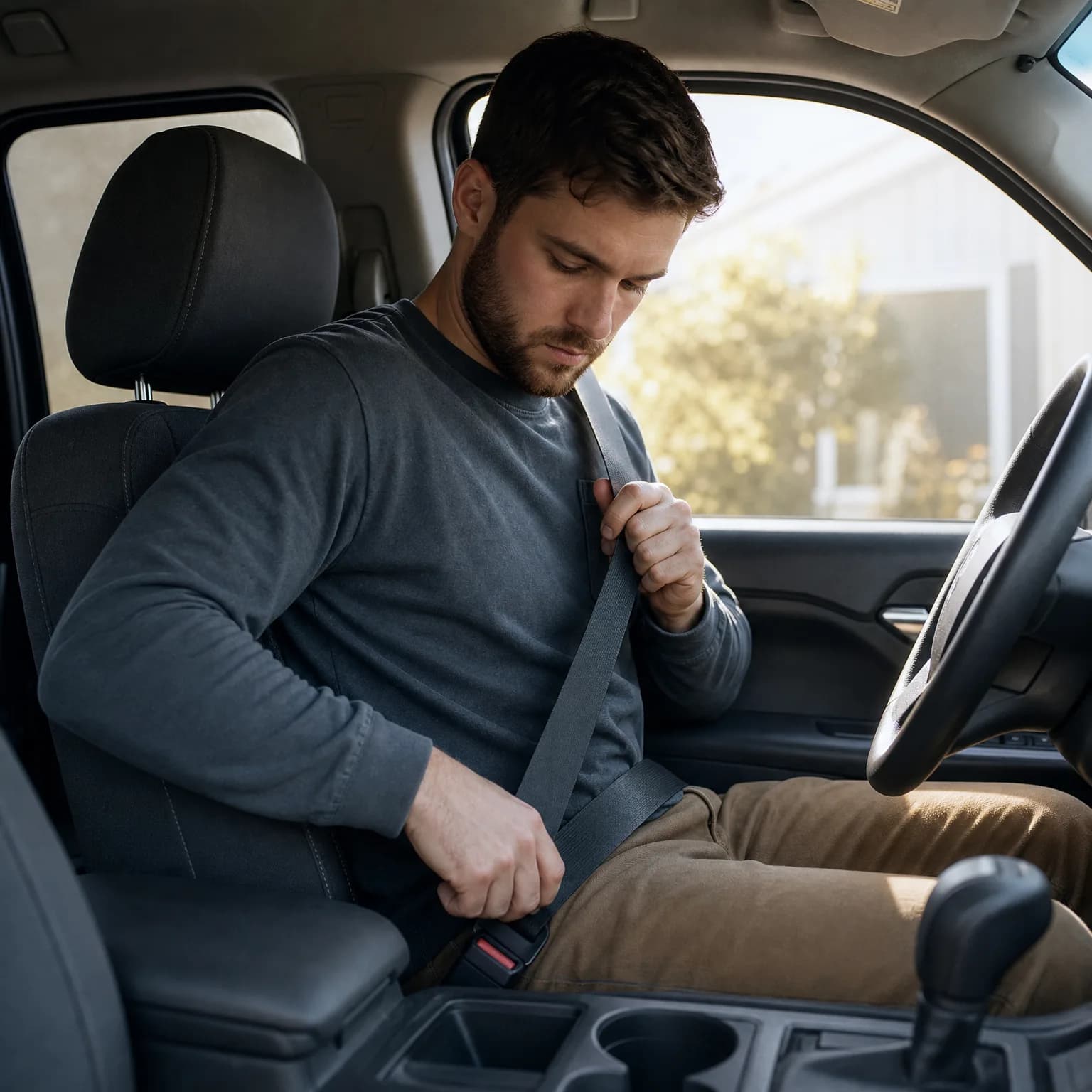
The 30-day hard suspension window and when you can actually file your petition
Mississippi Code § 63-11-30 imposes a mandatory 30-day hard suspension period for first-offense DUI convictions before any restricted license petition can be filed. The 30 days run from your conviction date, not your arrest date or administrative suspension start date. Petitioning before this 30-day window expires will be denied automatically by the court clerk — the statute leaves no judicial discretion on this timing.
You can file SR-22 during the hard suspension period. SR-22 is proof of financial responsibility, not proof of driving eligibility — maintaining it during suspension is both legal and strategically correct because it ensures the filing is active when your 30-day window closes and you're eligible to petition.
Rideshare drivers returning to platform work should file SR-22 on day 1 of the hard suspension, then calendar day 30 as the earliest petition filing date. Most Mississippi counties schedule restricted license hearings 14-21 days after petition filing, which means your total timeline from conviction to approved restricted license is typically 44-51 days if you sequence correctly.


What documentation the court requires at your restricted license hearing
Mississippi restricted license petitions require four core documents: the petition itself (available from the circuit or county court clerk), employer verification of work hours and location, proof of SR-22 insurance filing from DPS records, and payment of applicable fees. Rideshare drivers must provide additional documentation because platform driving doesn't fit the traditional employer-employee model courts expect.
For Uber or Lyft drivers, acceptable employer verification includes a letter from the platform confirming your active driver account status, your average weekly hours over the past 90 days, and your primary service area (city or county). The court needs to define your restricted driving route and hours — platform driving operates in zones rather than fixed routes, so most judges approve county-bounded restrictions rather than point-to-point routes. Submit your last three months of earnings summaries as supporting documentation to demonstrate platform driving is your primary income source.
Ignition interlock device installation verification is also required before the court will approve your petition. Mississippi mandates IID for all DUI restricted licenses under Miss. Code Ann. § 63-11-31. The IID vendor must submit installation confirmation to DPS electronically before your hearing date — bring the vendor receipt and installation appointment confirmation to court as backup documentation.
How Mississippi's SR-22 filing period extends beyond your restricted license term
Mississippi requires SR-22 filing for 3 years following DUI conviction. Your restricted license typically runs 60-90 days until your full suspension period ends and you're eligible for unrestricted reinstatement — but SR-22 filing continues for the full 3-year period regardless of when you regain full driving privileges.
Most rideshare drivers assume SR-22 filing ends when their restricted license converts to full reinstatement. It does not. Canceling SR-22 coverage at any point during the 3-year filing period triggers automatic re-suspension through DPS, even if your underlying suspension has been fully served and your license is otherwise valid. DPS receives electronic notification from your carrier within 24 hours of policy cancellation, and the re-suspension notice is mailed to your address of record within 10 days.
Rideshare platforms require continuous liability coverage that meets or exceeds state minimums while you're logged off the app — platform coverage only activates when you're actively transporting a passenger or en route to pickup. Your SR-22 policy serves as your off-platform coverage and satisfies both the state's filing requirement and the platform's insurance requirement simultaneously. Maintain it for the full 3-year period to avoid re-suspension and platform deactivation.

Line Up Coverage Before Your License Comes Back
Get Back on the Road
Non-owner SR-22 policies and why most rideshare drivers choose them incorrectly
Non-owner SR-22 policies provide liability coverage when you drive a vehicle you don't own. Rideshare drivers frequently use rental vehicles, borrowed vehicles, or vehicles titled in a family member's name — all scenarios where non-owner coverage applies. Mississippi allows non-owner SR-22 filing to satisfy the DUI reinstatement requirement, but the coverage must meet state liability minimums: $25,000 bodily injury per person, $50,000 bodily injury per accident, $25,000 property damage.
The error most rideshare drivers make is purchasing non-owner SR-22 without understanding that platform coverage only layers on top of your personal policy when you're actively working. If your non-owner policy doesn't include hired/rented vehicle coverage as an endorsement, you may have a gap when driving a rental between rides — the platform's off-duty coverage won't activate, and your non-owner policy may exclude rentals depending on the carrier and policy form.
Verify your non-owner SR-22 policy includes hired auto coverage before returning to rideshare work. This endorsement costs $8-$15/month and ensures continuous coverage whether you're driving your own vehicle, a rental, or a borrowed vehicle. Carriers writing non-owner SR-22 in Mississippi include Bristol West, The General, National General, and Progressive — compare quotes specifically for non-owner policies with hired auto endorsements, not standard liability-only non-owner forms.

What happens if your SR-22 lapses during your 3-year filing period
SR-22 lapse triggers automatic license re-suspension in Mississippi with no grace period and no advance warning beyond your carrier's policy cancellation notice. DPS receives electronic notification of policy cancellation within 24 hours, updates your driver record to suspended status, and mails a re-suspension notice to your last known address within 10 business days. The re-suspension is effective immediately upon DPS record update — not when you receive the mailed notice.
Rideshare drivers face platform deactivation within 24-72 hours of SR-22 lapse because Uber and Lyft run automated insurance verification checks against state DMV databases every 24 hours in most markets. Once your driver record shows suspended status, the platform's compliance system flags your account and deactivates your ability to accept rides. Reactivation requires proof of reinstatement and updated insurance documentation — which means you're off the platform for a minimum of 7-10 days even if you reinstate immediately.
Reinstating after SR-22 lapse costs $50 base reinstatement fee plus any new SR-22 filing fees from your carrier (typically $15-$35). You must also restart the 3-year SR-22 filing period from the reinstatement date, not from your original conviction date — a lapse 18 months into your filing period resets the clock to 3 years from reinstatement. Maintain continuous coverage by setting calendar reminders 30 days before your policy renewal date and confirming your carrier has processed payment and renewed your SR-22 filing with DPS.
How to sequence SR-22 filing, IID installation, and restricted license petition timing correctly
Correct sequencing: SR-22 filing on day 1 of your hard suspension, IID installation appointment scheduled for day 20-25, restricted license petition filed on day 30, hearing scheduled 14-21 days later. This sequence ensures all three requirements show active/complete in DPS records when the court clerk verifies eligibility at your hearing.
Incorrect sequencing creates delays: petitioning before SR-22 is on file forces a continuance. Filing SR-22 after your hearing date means the judge can't verify coverage and will deny or continue your petition. Installing IID after your hearing likewise prevents approval because Mississippi statute requires active IID before restricted license issuance.
Rideshare drivers should calendar these dates immediately after conviction: Day 1 — call SR-22 carrier and initiate filing. Day 7 — verify SR-22 shows active in DPS online driver record. Day 15 — schedule IID installation appointment for day 22-24. Day 22 — complete IID installation and obtain vendor receipt. Day 30 — file restricted license petition at circuit or county court. Day 45-51 — attend hearing with all documentation. This timeline assumes first-offense DUI with no complicating factors — second offense or aggravated DUI cases face longer hard suspension periods and may not be eligible for restricted licenses under current Mississippi law.
Frequently Asked Questions
Can I drive for Uber or Lyft with a Mississippi restricted license after DUI?
Yes, if your court-approved restricted license specifically authorizes rideshare driving as employment and your IID device is installed. Most Mississippi judges approve county-bounded restricted licenses for rideshare work because platform driving doesn't follow fixed routes. Submit platform earnings summaries and account verification to document rideshare as your primary income source when petitioning.
How much does SR-22 insurance cost for rideshare drivers in Mississippi after DUI?
SR-22 filing adds $15-$35 to your policy cost annually as a one-time filing fee, but DUI conviction raises your base liability premium to approximately $140-$220/month depending on your age, county, and carrier. Non-owner SR-22 policies cost less if you don't own a vehicle — typically $85-$140/month with hired auto coverage included.
Does my rideshare platform know if my SR-22 lapses in Mississippi?
Yes. Uber and Lyft run automated insurance verification checks against Mississippi DPS records every 24 hours in most markets. SR-22 lapse triggers immediate license re-suspension in the DPS database, which flags your driver account and deactivates your ability to accept rides within 24-72 hours.
What happens if I petition for a restricted license before my 30-day hard suspension ends?
The court clerk will reject your petition at filing. Mississippi Code § 63-11-30 requires a mandatory 30-day hard suspension before any restricted license petition can be filed for first-offense DUI — there is no judicial discretion to waive this period. Count 30 days from your conviction date, not your arrest or administrative suspension start date.
Can I use a non-owner SR-22 policy if I drive a rental for rideshare work?
Yes, but only if your non-owner policy includes a hired auto coverage endorsement. Non-owner SR-22 satisfies Mississippi's filing requirement, but standard non-owner policies often exclude rental vehicles. The hired auto endorsement costs $8-$15/month and ensures continuous coverage whether you're driving your own vehicle, a rental, or a borrowed vehicle between rides.
How long does it take to get a restricted license approved in Mississippi after DUI?
44-51 days from conviction if you file SR-22 immediately, install IID during the hard suspension period, and petition on day 30. Most Mississippi counties schedule restricted license hearings 14-21 days after petition filing. Filing SR-22 or installing IID after petitioning adds 30-45 days because the court will continue your hearing until DPS records show compliance.
Do I need to maintain SR-22 after my restricted license ends in Mississippi?
Yes. Mississippi requires 3 years of continuous SR-22 filing following DUI conviction regardless of when you regain full driving privileges. Your restricted license typically runs 60-90 days, but SR-22 filing continues for the full 3-year period. Canceling SR-22 coverage before 3 years triggers automatic re-suspension and platform deactivation.
Related Articles

MS DUI Reinstatement for Rideshare: Court & DMV Timing
5/3/2026
MS DUI Reinstatement for Single Parents: SR-22 Timing
5/3/2026

Mississippi DUI SR-22 Filing Timing for Students
5/3/2026
MS Warrant Suspension: SR-22 for Rideshare Drivers
5/3/2026

MS Rideshare Unpaid Ticket Suspensions & SR-22 Gaps
5/3/2026

MS Child Support Suspension: SR-22 Timing for Rideshare
5/3/2026