
Maine DUI reinstatement for rideshare: the actual cost stack
Free to compare
Why rideshare reinstatement timelines differ from standard driver reinstatement
Uber and Lyft run continuous background checks that query the Maine Bureau of Motor Vehicles database directly. A cleared court case does not update your BMV record automatically. Most Maine OUI drivers pay their reinstatement fee, file SR-22, and immediately reapply to rideshare platforms—only to be rejected because the BMV shows their license as suspended for another 7-14 business days while the SR-22 filing processes through state systems.
Rideshare platforms do not accept restricted licenses for driver activation, even if your restricted license permits work-related driving. Maine's OUI restricted license program allows court-approved essential travel including employment, but Uber and Lyft classify rideshare driving as commercial passenger transport requiring full unrestricted licensure. You cannot drive for rideshare during your restricted license period.
The cost stack for full reinstatement includes fees you pay once and fees you pay monthly for three years. Maine requires SR-22 filing for three years from your OUI conviction date, not from your reinstatement date. If you waited six months between conviction and reinstatement, you still owe the full three-year SR-22 period starting from conviction—your carrier bills you for 2.5 years post-reinstatement, not 3 years.
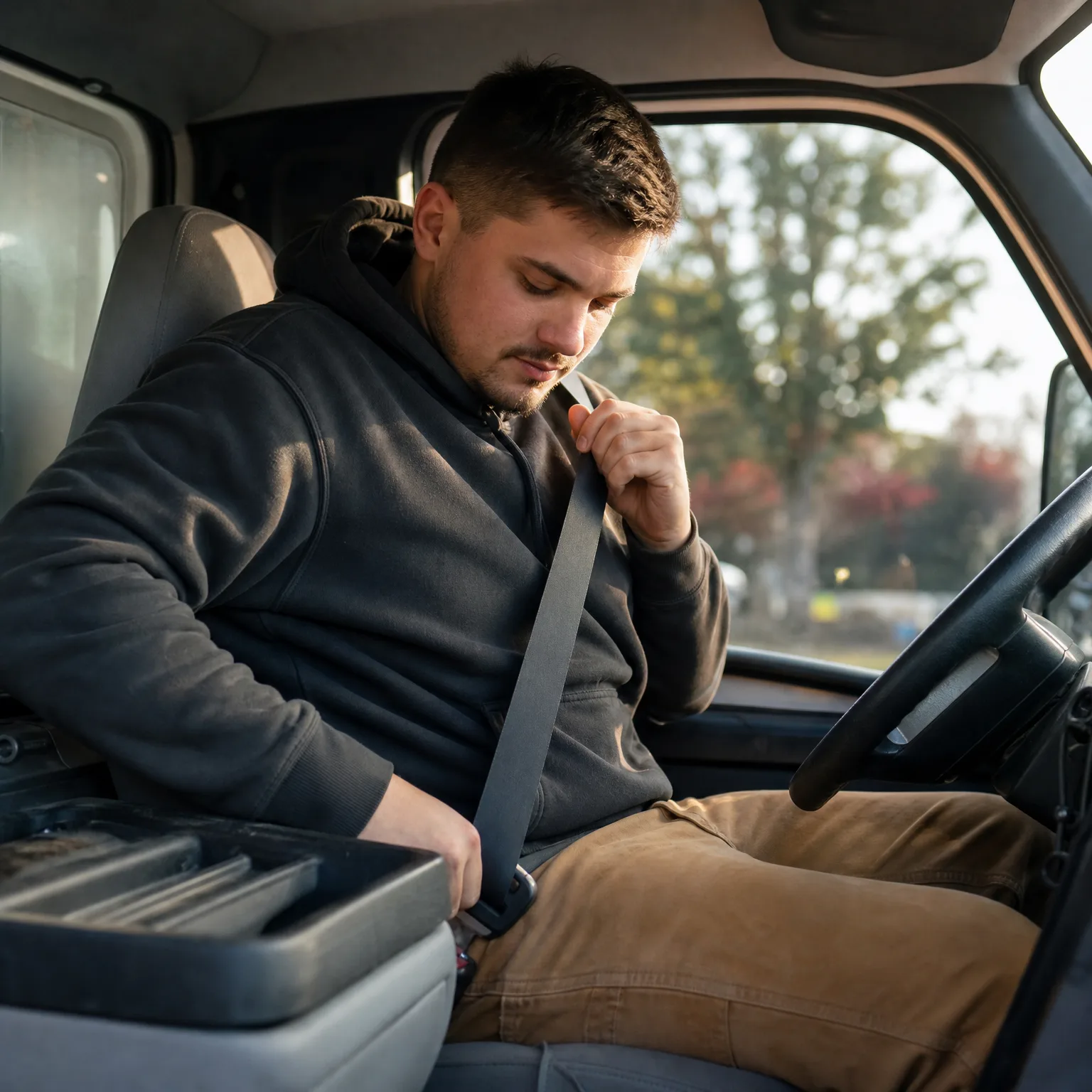
The five-part reinstatement cost stack Maine rideshare drivers actually pay
Maine's OUI reinstatement process splits costs across five separate line items. The Driver Education and Evaluation Program (DEEP) fee runs $200-$350 depending on the provider you choose and whether your evaluation recommends the 8-hour or 20-hour course tier. DEEP completion is mandatory before the BMV accepts your reinstatement application—this is Maine-specific and distinct from a generic defensive driving course.
The BMV reinstatement fee for OUI cases is higher than the standard $50 base fee cited on Maine's general reinstatement page. Expect to pay $100-$150 at the BMV when you submit your reinstatement paperwork and proof of SR-22 filing. This fee clears your administrative suspension, but your license is not active until the BMV posts the reinstatement to their system.
SR-22 filing fees charged by your insurance carrier range from $15-$35 as a one-time processing charge. This is separate from your premium increase. Your carrier submits the SR-22 certificate to the Maine BMV electronically, but processing takes 5-10 business days. Rideshare platforms check BMV records, not your carrier's filing confirmation—if the BMV database still shows suspension when you reapply, Uber and Lyft reject your application even if your carrier filed days earlier.
SR-22 insurance premiums are the largest cost over three years. Maine OUI drivers typically pay $140-$220/month for liability coverage with SR-22 filing, compared to $85-$120/month for standard coverage without an OUI conviction. The $55-$100/month premium markup multiplied over 36 months adds $1,980-$3,600 to your total cost. Estimates based on available industry data; individual rates vary by age, county, and prior driving history.
Ignition interlock device (IID) installation and monitoring fees add $75-$125 for installation and $70-$100/month for monitoring and calibration. First-offense OUI in Maine requires IID for at least 150 days post-reinstatement under 29-A M.R.S. § 2412-A. Repeat offenses require longer periods. Your IID provider submits compliance reports to the Maine BMV monthly—missed calibration appointments trigger violation notices that can suspend your newly reinstated license.


The restricted license window and why it doesn't help rideshare drivers
Maine allows OUI offenders to petition the court for a restricted license after completing a mandatory hard suspension period. First-offense OUI carries a 30-day hard suspension before restricted license petitions are viable. You cannot drive at all during this window, and no restricted license program changes that.
Restricted licenses in Maine are court-issued, not BMV-issued. You file your petition with the court that handled your OUI case. The court defines your driving restrictions—typically work, school, medical appointments, and other essential travel within specific hours. Rideshare driving does not qualify as essential travel under Maine court standards because it is commercial passenger transport, not commuting to a fixed employer.
If you already hold a restricted license and need full reinstatement for rideshare eligibility, you still owe the full reinstatement fee stack. Your restricted license does not count as partial reinstatement. You pay the full BMV reinstatement fee, maintain SR-22 for the full three-year period, and complete any remaining IID obligation before Uber or Lyft will approve your driver account.

Line Up Coverage Before Your License Comes Back
Get Back on the RoadWhat rideshare platforms actually verify before activating your account
Uber and Lyft query the Maine BMV database through third-party background check vendors. These checks run continuously—not just at initial application. Your BMV record must show active unrestricted license status with no suspensions, no restrictions, and no pending violations. A restricted license flags as ineligible. A license showing "reinstatement pending" flags as suspended.
The BMV posts reinstatement to their database 7-14 business days after you submit your reinstatement fee and proof of SR-22 filing. Your carrier's SR-22 filing confirmation is not sufficient for rideshare approval. Drivers who reapply to rideshare platforms immediately after paying reinstatement fees are rejected because the BMV database has not updated yet.
To confirm your reinstatement posted before reapplying, request a copy of your Maine driving record directly from the BMV. The record will show your license status as active with no suspensions. Once you have that confirmation, rideshare platforms typically approve your account within 3-5 business days assuming no other background check issues.

How to sequence reinstatement steps to minimize your total timeline
Complete DEEP before filing SR-22. The Maine BMV will not accept your reinstatement application without proof of DEEP completion. Filing SR-22 early wastes money because your three-year filing period starts when your carrier files, not when you reinstate. If you file SR-22 in January but don't complete DEEP and pay reinstatement fees until March, you pay for two months of SR-22 coverage while still suspended.
Schedule your IID installation appointment for the same week you plan to submit reinstatement paperwork. Maine requires proof of IID installation before reinstating your license for OUI cases. Installers typically need 5-7 business days to schedule appointments. If you wait until after paying your reinstatement fee to call an installer, you add another week to your timeline.
Submit your reinstatement application in person at a Maine BMV branch office if possible. In-person submission allows the clerk to verify all documents immediately and flag missing items before you leave. Mail-in applications add 10-15 business days to processing and risk rejection for incomplete paperwork, forcing you to restart the timeline.
Wait 10 full business days after submitting reinstatement before reapplying to rideshare platforms. Request your Maine driving record on day 10. If the record shows active unrestricted status, reapply immediately. If it still shows suspension, wait another 3-5 business days and check again. Reapplying before the BMV database updates guarantees rejection and creates a failed application record in your rideshare account history.

Finding SR-22 coverage that rideshare platforms accept
Rideshare platforms require liability coverage at Maine's minimum limits or higher: $50,000 bodily injury per person, $100,000 bodily injury per accident, $25,000 property damage. Your SR-22 filing must show these limits at minimum. Many carriers issue SR-22 certificates at state minimum limits by default, which satisfies Maine BMV reinstatement requirements and rideshare platform insurance verification.
If you do not currently own a vehicle, non-owner SR-22 policies provide liability coverage and SR-22 filing without insuring a specific car. Non-owner policies typically cost $60-$110/month with SR-22 filing for Maine OUI drivers. Once your license is reinstated and rideshare platforms approve your account, you drive the vehicle you plan to use for rideshare under the platform's commercial coverage during active trips—your non-owner policy covers you between trips and during personal use.
Not all carriers accept Maine OUI drivers for new policies. Carriers that specialize in high-risk coverage are more likely to offer competitive rates with SR-22 filing than standard carriers. Comparing quotes from 3-5 carriers can reduce your monthly premium by $30-$70, which saves $1,080-$2,520 over the three-year SR-22 filing period.
Frequently Asked Questions
Can I drive for Uber or Lyft with a Maine restricted license after an OUI?
No. Uber and Lyft require full unrestricted license status for driver activation. Maine's restricted license program allows essential travel like work commutes, but rideshare platforms classify passenger transport as commercial driving that requires unrestricted licensure.
How long does SR-22 filing last after a Maine OUI conviction?
Maine requires SR-22 filing for three years from your OUI conviction date, not from your reinstatement date. If you reinstated six months after conviction, you owe 2.5 years of SR-22 coverage post-reinstatement.
What is Maine's DEEP program and do I need it for rideshare reinstatement?
The Driver Education and Evaluation Program (DEEP) is Maine's mandatory alcohol/drug assessment and education requirement for OUI reinstatement. You cannot reinstate your license without completing DEEP. Cost is $200-$350 depending on your assigned course tier.
Why did Uber reject my application after I paid my Maine reinstatement fee?
Uber checks the Maine BMV database, which updates 7-14 business days after you submit reinstatement paperwork. Reapplying immediately after payment shows your license as still suspended in state records, triggering automatic rejection.
Do I need to own a car to get SR-22 insurance for rideshare driving in Maine?
No. Non-owner SR-22 policies provide liability coverage and SR-22 filing without insuring a specific vehicle. Once reinstated, you drive the car you use for rideshare under the platform's commercial coverage during trips and your non-owner policy covers you between trips.
How much does ignition interlock installation cost in Maine for OUI reinstatement?
Installation costs $75-$125, and monthly monitoring runs $70-$100. First-offense OUI in Maine requires at least 150 days of IID use. Your provider submits compliance reports to the BMV—missed calibration appointments can trigger a new suspension.
Can I start the SR-22 filing process before completing DEEP in Maine?
You can file SR-22 early, but it wastes money. Your three-year SR-22 period starts when your carrier files, not when you reinstate. Filing before DEEP completion means paying for SR-22 coverage while your license is still suspended.
Related Articles
Maine DUI Reinstatement for Rideshare: SR-22 Timing
5/3/2026

Maine Rideshare Reinstatement Costs: Unpaid Tickets
5/3/2026
Maine Rideshare Lapse Reinstatement: Real Cost Stack
5/3/2026

Maine DUI Reinstatement Costs: The Real Stack
5/3/2026

Maine Child Support Suspension Costs: Reinstatement Guide
5/3/2026
MA OUI Reinstatement Costs for Rideshare Drivers
5/3/2026