
Kentucky DUI Reinstatement Costs for Rideshare Drivers
Free to compare
Why Rideshare DUI Reinstatement in Kentucky Costs More Than Standard Drivers
Kentucky's Ignition Interlock License program under KRS 189A.340 allows conditional driving after the 30-day hard suspension period for first-offense DUI. Most drivers install the device, file SR-22, and drive to work. Rideshare drivers face additional costs because Uber and Lyft require continuous platform access documentation, which means paying for the interlock device during the entire restriction period without gaps—any missed monthly calibration triggers platform deactivation, not just a state compliance issue.
The Kentucky Transportation Cabinet's $40 reinstatement fee appears on DMV fee schedules, but that fee applies only after you satisfy four separate conditions: completion of the hard suspension period, District Court approval of your hardship petition (Jefferson and Fayette counties charge $100–$150 in court costs; rural counties vary), ignition interlock device installation with KYTC-approved provider, and SR-22 financial responsibility filing active for the full 3-year period required under KRS 189A.410. Each condition carries its own cost.
Rideshare platforms treat lapses differently than the state does. Kentucky allows a 10-day grace period for late interlock calibration before issuing a violation notice. Uber and Lyft deactivate accounts within 24–48 hours of any compliance alert from the monitoring authority. Reactivation requires proof of current compliance, which creates a documentation loop most drivers don't anticipate: your provider must submit updated compliance data to KYTC, KYTC must update your driver record, and you must request a current abstract showing active interlock status to upload to the rideshare platform. This process takes 5–7 business days in Louisville and Lexington, longer in counties without online KYTC portal access.
Kentucky Ignition Interlock Device Costs: Installation, Calibration, and Monthly Monitoring
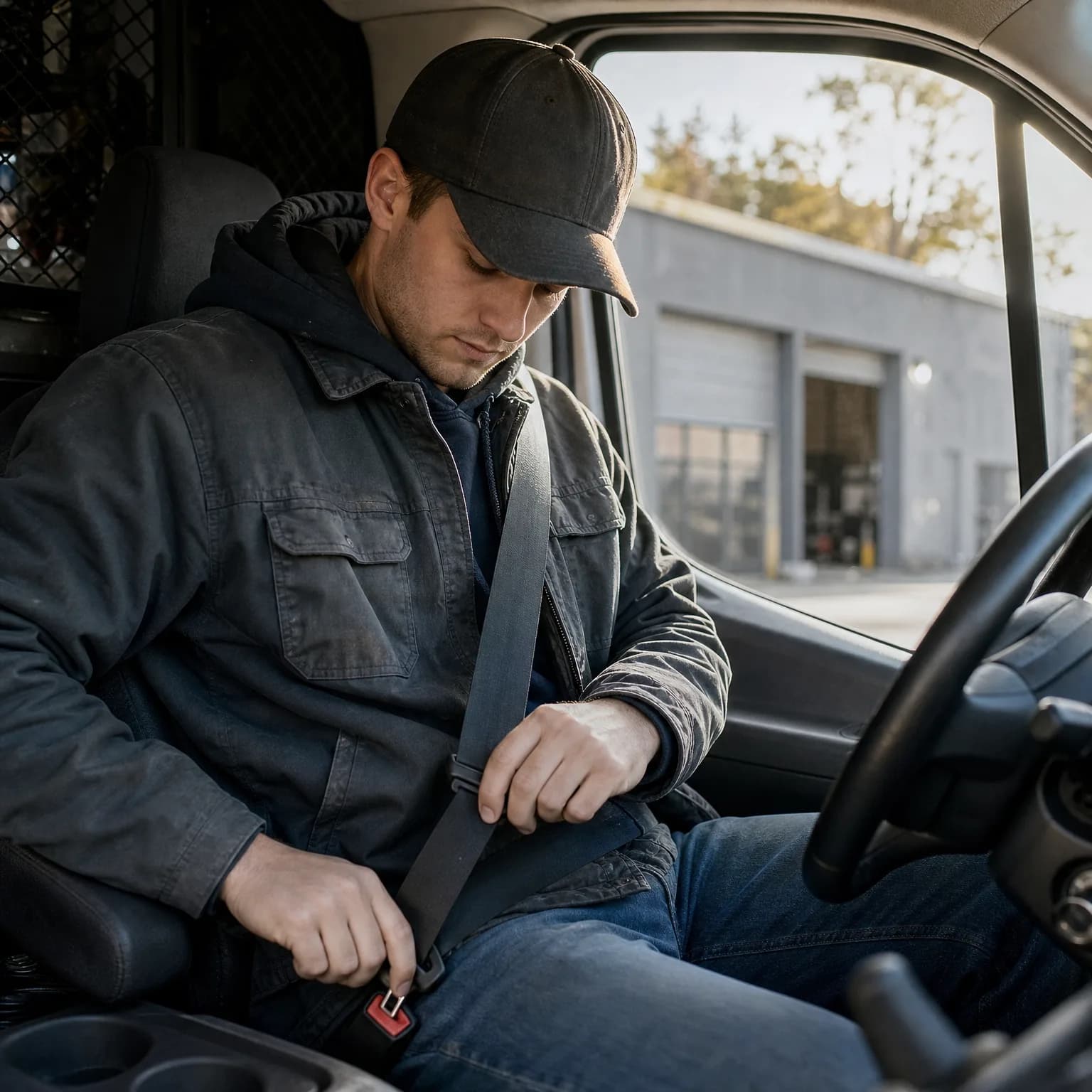
Approved interlock providers in Kentucky charge $150–$200 for device installation. This is a one-time fee covering hardware setup, initial calibration, and instruction on proper use. The device remains installed for the duration of your restriction period—minimum 6 months for first-offense DUI, longer for aggravated or repeat offenses.
Monthly calibration and monitoring fees run $75–$100 per month. Calibration is required every 30 days to verify device function and record any violations (failed breath tests, missed rolling retests, tampering attempts). Providers in Jefferson County and Fayette County are clustered near downtown Louisville and Lexington; rural counties often have one or two approved providers, which limits price competition. If you drive for Lyft or Uber, you cannot skip a calibration appointment—the platform receives violation alerts directly from the monitoring authority, and any missed appointment triggers immediate deactivation.
Installation costs are due upfront. Monthly fees are billed in advance. Providers do not offer payment plans for the installation fee. If you remove the device before the restriction period ends, Kentucky revokes your Ignition Interlock License and you restart the suspension from day one. Removal fees (when you complete the program) range from $50–$75.

SR-22 Filing Costs and Premium Markup for Kentucky DUI Drivers
Kentucky requires SR-22 financial responsibility filing for 3 years from the DUI conviction date, not the filing date. The filing itself costs $15–$35, a one-time fee your carrier submits to the Kentucky Transportation Cabinet. This fee appears on your first policy invoice or is billed separately at policy inception.
The premium markup is the larger expense. DUI drivers in Kentucky pay $140–$250 per month for liability-only SR-22 policies, compared to $60–$90 per month for clean-record drivers with equivalent coverage limits. Estimates based on available industry data; individual rates vary by driving history, vehicle, coverage selections, and location. Rideshare drivers often purchase non-owner SR-22 policies because they use platform-provided commercial coverage while driving and do not maintain a personal vehicle. Non-owner policies cost $100–$180 per month for DUI filers in Louisville and Lexington.
Carriers recalculate rates annually. Most DUI drivers see a 10–15% rate reduction at the first renewal if no additional violations occur. The SR-22 requirement does not decrease premiums—it is a filing status, not a discount trigger. You maintain the SR-22 for the full 3 years even if your Ignition Interlock License converts to a standard license after 6–12 months. Canceling SR-22 before the 3-year period ends triggers automatic suspension under KRS 304.39-080, and reinstatement requires starting the SR-22 clock over.
Some carriers decline to write SR-22 policies for rideshare drivers because the interlock device complicates platform liability questions. Expect to contact 3–5 carriers before finding one that will quote. Non-standard carriers (Bristol West, The General, Acceptance) write most Kentucky DUI rideshare policies.
District Court Hardship Petition Costs in Jefferson and Fayette Counties
Kentucky's Ignition Interlock License program requires District Court approval. You file a petition with the court that handled your DUI case, submit proof of hardship (employment records, rideshare platform acceptance documentation, proof of completed DUI education classes), and pay court costs. Jefferson County (Louisville) charges $100–$150 in filing and administrative fees. Fayette County (Lexington) charges $125–$175. Rural counties vary; some charge as little as $75, others as much as $200.
The petition must include proof of SR-22 filing. The court will not schedule a hearing until your SR-22 certificate shows active coverage. File SR-22 first, wait 3–5 business days for KYTC records to update, then request a current insurance verification letter from your carrier showing active SR-22 status. Submit that letter with your petition. If you file the petition before SR-22 posts to the state system, the court clerk will reject the filing and you lose the court costs.
Hearing timelines depend on court dockets. Jefferson County District Court schedules hardship hearings 2–4 weeks after petition filing. Fayette County schedules within 1–3 weeks. Rural counties often schedule within 7–10 days because dockets are lighter. If the judge denies your petition (typically due to insufficient hardship documentation or outstanding fines), you pay court costs again when you refile. Most rideshare hardship petitions are approved on the first attempt if you document platform acceptance and show no alternative employment.

Line Up Coverage Before Your License Comes Back
Get Back on the Road
Total First-Year Cost Stack for Kentucky Rideshare DUI Reinstatement
Add the line items: $40 KYTC reinstatement fee, $150–$200 interlock installation, $75–$100 monthly interlock monitoring for 6–12 months ($450–$1,200 total), $100–$175 District Court petition costs, $15–$35 SR-22 filing fee, and $140–$250 per month SR-22 insurance premiums for 12 months ($1,680–$3,000). Low-end total: approximately $2,435. High-end total: approximately $4,650. Most Louisville and Lexington rideshare drivers land in the $2,800–$3,500 range.
This estimate assumes no compliance violations, no missed calibration appointments, and approval on the first hardship petition. A single failed interlock breath test (0.025 BAC or higher) extends your restriction period by 3–6 months and adds $225–$600 in additional monitoring fees. Missing a calibration appointment costs $50–$75 in late fees plus platform deactivation time. Outstanding court fines or unpaid DUI program fees delay petition approval and add holding costs.
The KYTC reinstatement fee is the smallest expense in the stack. Budgeting only for the $40 fee leaves most drivers unable to complete the process when the District Court schedules the hearing. Court costs and SR-22 premiums are due before the hearing date. Interlock installation is due the day the device is installed. If you cannot pay the installation fee, the provider will not install the device, and the court will not approve your petition without proof of installation.
What Rideshare Platforms Require Beyond State Compliance
Uber and Lyft require continuous background check compliance. Any suspension, even during an active Ignition Interlock License period, triggers a compliance review. You must upload proof of valid driving privileges (a copy of your IIL with court-approved restrictions), proof of active SR-22 filing (insurance declaration page showing SR-22 status), and a current Kentucky driver record abstract showing no lapses. Platforms request updated documentation every 90 days while the restriction is active.
Your Ignition Interlock License includes court-defined route and time restrictions. Kentucky courts typically approve work-related, medical, DUI program attendance, and court-ordered travel. Rideshare driving qualifies as work-related travel if documented in your petition. The court does not specify individual routes—you are approved for driving within the scope of rideshare platform work. If you accept rides outside the court-approved purpose (for example, personal errands while not logged into the platform), you violate restriction terms and risk IIL revocation.
Platforms monitor device violations through the same state reporting system KYTC uses. Any failed breath test, missed rolling retest, or tampering alert appears on your compliance record within 24 hours and triggers automatic account deactivation. Reactivation requires proof the violation was resolved and you remain in active compliance. This proof must come from KYTC, not your interlock provider. Request a current driver record abstract through the Kentucky Online Gateway at drive.ky.gov and upload it to the platform's driver portal.
How Long You Maintain SR-22 and Interlock After Reinstatement
The ignition interlock device remains installed for the period specified in your District Court order—6 months minimum for first-offense DUI, 12 months for aggravated cases, longer for repeat offenses. The device cannot be removed early. If you complete the restriction period and remove the device, you still maintain SR-22 filing for the remainder of the 3-year period required under KRS 189A.410.
SR-22 duration is measured from the DUI conviction date, not the filing date. If your conviction was January 1, 2024, and you filed SR-22 on March 1, 2024, your 3-year requirement ends January 1, 2027. Removing SR-22 before that date triggers automatic suspension and requires restarting the 3-year clock. Your carrier will notify KYTC if you cancel the policy or allow it to lapse. KYTC suspends your license within 10 days of receiving the lapse notice.
Once the interlock restriction period ends, you petition the District Court for conversion to a standard Kentucky driver's license. Court costs for conversion petitions run $50–$100 in Jefferson and Fayette counties. KYTC processes the conversion within 5–7 business days after court approval. Your SR-22 requirement continues unchanged—you simply drive without the device while maintaining SR-22 coverage for the remaining time.
Frequently Asked Questions
Can I drive for Uber in Kentucky with an Ignition Interlock License?
Yes, if your District Court hardship petition specifically documents rideshare platform work as your approved employment purpose. The court does not pre-approve individual routes, but you must remain within work-related travel as defined in your petition. Platform driving qualifies as work-related if you included rideshare acceptance documentation when you filed.
How much does SR-22 insurance cost in Kentucky after a DUI?
DUI drivers in Kentucky typically pay $140–$250 per month for liability-only SR-22 policies. Non-owner SR-22 policies for rideshare drivers cost $100–$180 per month in Louisville and Lexington. Estimates based on available industry data; individual rates vary by driving history, vehicle, coverage selections, and location.
What happens if I miss an interlock calibration appointment in Kentucky?
Your ignition interlock provider reports the missed appointment to the Kentucky Transportation Cabinet within 24 hours. Uber and Lyft receive the same compliance alert and deactivate your account within 1–2 days. You must complete the missed calibration, request an updated driver record abstract from KYTC showing current compliance, and upload it to the rideshare platform to reactivate your account. This process takes 5–7 business days.
Do I need SR-22 for the entire time the interlock device is installed?
Yes, and longer. Kentucky requires SR-22 for 3 years from the DUI conviction date. Your interlock device is typically installed for 6–12 months. After the device is removed, you continue maintaining SR-22 for the remainder of the 3-year period. Canceling SR-22 early triggers automatic license suspension.
How long does it take to get an Ignition Interlock License approved in Kentucky?
Jefferson County District Court schedules hardship hearings 2–4 weeks after you file the petition. Fayette County schedules within 1–3 weeks. After the hearing, KYTC processes the Ignition Interlock License within 5–7 business days. Total timeline from petition filing to receiving the IIL: 3–5 weeks in Louisville and Lexington.
Can I get a payment plan for the ignition interlock device installation?
No. Approved interlock providers in Kentucky require the $150–$200 installation fee upfront on the day the device is installed. Monthly monitoring fees ($75–$100/month) are billed in advance. If you cannot pay the installation fee, the provider will not install the device, and the District Court will not approve your hardship petition without proof of installation.
What court costs do I pay to file a hardship petition in Kentucky?
Jefferson County (Louisville) charges $100–$150 in District Court filing and administrative fees. Fayette County (Lexington) charges $125–$175. Rural counties vary from $75–$200. These costs are due when you file the petition and are not refundable if the court denies your request.
Related Articles

Kentucky Rideshare Insurance Lapse Reinstatement Costs
5/3/2026

Kentucky Rideshare SR-22 Reinstatement: Full Cost Stack
5/3/2026

KY Warrant Suspension Reinstatement Costs for Rideshare
5/3/2026
Arizona DUI Reinstatement Costs for Rideshare Drivers
5/3/2026
KY Rideshare Reinstatement After Lapse: Court & DMV Timing
5/3/2026
CDL Reinstatement Costs After DUI in Kentucky
5/3/2026