
Hawaii DUI Reinstatement Cost Breakdown for College Students
Free to compare
The Three-Agency Coordination Problem Hawaii Creates for College Students
Hawaii requires you to coordinate between the district court that sentenced you, the county DMV office that processes your reinstatement, and your SR-22 insurance carrier—but none of these agencies share records automatically. Most UH Manoa students assume their court completion date triggers DMV reinstatement eligibility, but Hawaii's county-level licensing structure means your court clearance in Honolulu doesn't automatically update your driver record on Maui or the Big Island if that's where you originally held your license.
The Administrative Driver's License Revocation Office (ADLRO) handles implied consent revocations separately from court-ordered suspensions, creating two parallel timelines. Your criminal DUI case proceeds through district court, while your administrative license revocation runs through ADLRO under HRS §291E-33. College students moving between islands for summer internships or co-op placements often miss ADLRO hearing deadlines because notices are mailed to their parent's address, not their campus housing.
Hawaii does not operate a unified online reinstatement portal. You must contact or visit the county licensing division where your license was originally issued—City & County of Honolulu, Maui County, Hawaii County, or Kauai County—to initiate reinstatement. Each county processes paperwork at different speeds, and what works in Honolulu may require additional documentation in Hilo.
Hawaii Restricted License Pathway: Court Petition Before DMV Reinstatement
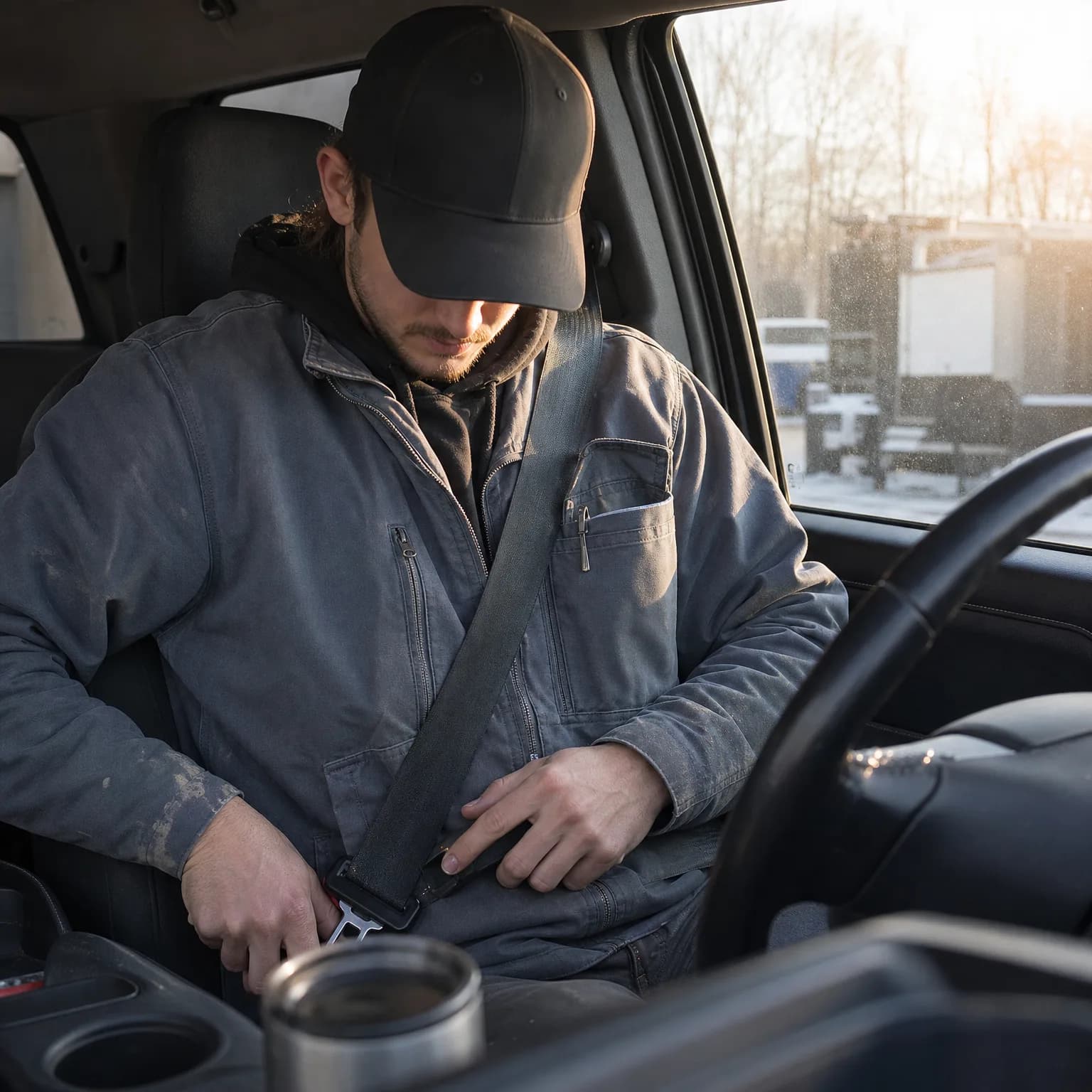
Hawaii issues restricted licenses through court petition, not through DMV application. You file your request with the district court that handled your DUI case, and the judge sets route and time restrictions at the hearing. HRS §291E-41 mandates ignition interlock device installation as a statutory requirement for any restricted license issued during a DUI suspension—this is not judicial discretion, it's a legal mandate.
College students typically petition for routes covering campus, part-time work, medical appointments, and essential errands. The court defines specific hours, not just purposes. If your class schedule changes mid-semester, you need to file an amended petition—driving outside approved hours or routes violates the restriction and triggers automatic revocation without warning.
Restricted license conditions vary meaningfully between Hawaii's four counties because each has its own district court system with independent judicial discretion. A Honolulu judge may approve a 20-mile radius for essential errands, while a Maui judge might require pre-approved specific addresses. The court petition process adds 30 to 60 days to your timeline before you can legally drive again, and most students don't know they need to budget for both the court filing fee and the ignition interlock installation before submitting the petition.

The Actual Cost Stack: Filing Fees, Reinstatement Charges, and SR-22 Markup
Hawaii's base reinstatement fee is $30, but that's only the starting point. Court filing fees for restricted license petitions vary by county and typically add $50 to $150. Ignition interlock device installation costs $75 to $150 upfront, plus $60 to $90 per month for monitoring and calibration—over a typical 6-month restricted license period, that's $435 to $690 total.
SR-22 filing itself costs $15 to $35 as a one-time fee, but the real expense is the premium markup. College students under 25 with a DUI conviction typically see monthly premiums increase from $120 to $190 per month to $240 to $380 per month with SR-22 filing. Over Hawaii's mandatory 3-year filing period (measured from conviction date, not filing date under HRS Chapter 291E), that premium difference represents $4,320 to $6,840 in total additional cost.
Non-owner SR-22 policies cost less if you don't own a vehicle—$85 to $140 per month for liability-only coverage that satisfies Hawaii's financial responsibility requirement. Most UH students living on campus without a car don't realize non-owner policies exist and waste money insuring a vehicle they sold or left with parents on the mainland. The 3-year SR-22 filing clock starts at your conviction date, not your filing date, which means delays in getting coverage don't extend the requirement—but they do extend the period you're paying elevated premiums without being able to drive.
What Happens If You File SR-22 Before Installing the Ignition Interlock
Hawaii's DMV will not process your SR-22 filing until your ignition interlock provider submits installation verification to the county licensing office. Most states allow simultaneous filing, but Hawaii requires the IID installation first, then SR-22 filing, then reinstatement application. Students who contact an SR-22 carrier first and file before installing the device waste 3 to 6 weeks waiting for the county DMV to reject the filing and return it for resubmission.
Your interlock provider must be certified under HRS Chapter 291E and must submit electronic installation confirmation directly to the county licensing division. You cannot hand-deliver installation receipts to the DMV—the system requires provider-submitted verification. If your provider misses the submission window or submits to the wrong county office (common for students who moved between islands), your SR-22 filing sits in pending status and you remain suspended.
Once the interlock verification posts, your carrier can file SR-22, and the county DMV can process your reinstatement application. This sequencing requirement is why most Honolulu-area college students experience 45 to 90 day reinstatement delays even after completing all court requirements—they treat the steps as simultaneous when Hawaii law structures them as sequential.

Line Up Coverage Before Your License Comes Back
Get Back on the Road
Hidden Costs That Exceed the Base Fees
Court-ordered DUI education programs in Hawaii cost $300 to $600 depending on county and program provider. Missing two consecutive classes triggers automatic program dismissal and restricted license revocation under most Hawaii district court orders, forcing you to re-enroll and restart the entire program at full cost. College students balancing finals and part-time work frequently underestimate the attendance rigidity these programs enforce.
Parking violations and unpaid campus tickets block reinstatement in Hawaii. The county DMV cross-references outstanding fines before processing any reinstatement application, and most students don't realize a $45 UH parking citation from sophomore year now delays their DUI reinstatement by 2 to 4 weeks while they track down the campus parking office and clear the balance.
Late SR-22 filing penalties compound quickly. If your policy lapses during the 3-year filing period, your carrier notifies the state within 10 days, your license is re-suspended, and you pay the $30 reinstatement fee again plus a new SR-22 filing fee. Students on tight budgets who let coverage lapse to save money end up paying double reinstatement costs and extending their SR-22 requirement because Hawaii measures the 3-year period from continuous compliance, not from the original conviction date if compliance breaks.

How Moving Between Islands Mid-Suspension Affects Costs
Hawaii's county-level licensing structure creates paperwork complexity for students attending UH Manoa who originally held licenses issued on Maui, the Big Island, or Kauai. Your reinstatement application must go through the county where your license was issued, not where you currently live. Students who moved to Honolulu for school but were arrested on the Big Island during winter break must coordinate with Hawaii County DMV, not Honolulu, even if they now live in campus housing year-round.
Transferring your license between counties before reinstatement is possible but adds 15 to 30 days to your timeline and requires in-person visits to both county offices. Most students decide it's faster to handle reinstatement through their original county remotely, but that creates challenges when the county DMV requires in-person document verification for restricted license petitions or ignition interlock certification.
Island geography means no inter-island driving by road, which simplifies route restriction enforcement but complicates reinstatement logistics. A Maui County restricted license doesn't require amendment if you fly to Oahu for a weekend—you simply cannot drive on Oahu under that restricted license. Students who don't understand this distinction sometimes attempt to rent cars on other islands during restricted license periods, triggering automatic revocation when rental agencies report the violation to the issuing county.
Finding SR-22 Coverage That Fits a College Student Budget
Hawaii SR-22 carriers vary premium quotes by as much as $120 per month for identical coverage and driver profiles. Progressive, GEICO, and State Farm all write SR-22 policies in Hawaii, but not all write non-owner policies—students without vehicles need carriers that specialize in non-owner SR-22, which is a smaller market subset.
Paying in full upfront (if financially possible) typically saves 8% to 12% compared to monthly installments, but most college students cannot afford $1,020 to $1,680 in a single payment for a 6-month policy term. Monthly payment plans add $10 to $25 in installment fees per month, which over 3 years represents $360 to $900 in avoidable costs if you can secure a co-signer or family assistance for upfront payment.
Bundling SR-22 with renters insurance sometimes unlocks a 5% to 10% discount if the same carrier offers both products. Students living in campus housing or off-campus apartments often carry renters insurance already—consolidating both policies with one carrier reduces total monthly outlay and simplifies the payment schedule to avoid accidental lapses that restart the SR-22 clock.
Frequently Asked Questions
Can I get financial aid or a payment plan for Hawaii DUI reinstatement fees?
Hawaii courts sometimes allow payment plans for DUI education programs and court fines if you file a financial hardship petition before your sentencing hearing, but the $30 DMV reinstatement fee and SR-22 filing fees are typically required upfront. Some SR-22 carriers offer monthly payment plans for premiums, but those plans add $10 to $25 per month in installment fees compared to paying every 6 months.
Does my parent's insurance policy cover me for SR-22 filing in Hawaii?
You cannot use a parent's policy for your SR-22 filing unless you are listed as a named insured on that policy and the vehicle is registered in your name or jointly. Most college students need their own standalone non-owner SR-22 policy because they don't own a vehicle and their parents' mainland policies don't cover Hawaii licensing requirements.
What happens if I graduate and move to the mainland before my Hawaii SR-22 filing period ends?
Hawaii's 3-year SR-22 filing requirement follows you to your new state—you must maintain continuous SR-22 filing even after moving, and your new state's DMV will require proof of Hawaii SR-22 compliance before issuing a new license. Most students transferring out of state need to coordinate between their Hawaii SR-22 carrier and a new carrier in their destination state to avoid coverage gaps that restart the clock.
Can I use Uber or campus shuttles instead of getting a restricted license in Hawaii?
Using Uber, campus shuttles, or public transit does not satisfy Hawaii's SR-22 filing requirement—you must maintain SR-22 coverage for the full 3-year period even if you never drive. A restricted license is optional and only necessary if you need to drive during your suspension, but SR-22 filing is mandatory regardless of whether you actually operate a vehicle.
Will my Hawaii DUI conviction affect my student loans or campus housing?
A DUI conviction does not automatically disqualify you from federal student loans, but some scholarships and campus housing agreements include conduct clauses that may be triggered by criminal convictions. You should review your financial aid agreement and student housing contract carefully, and some students choose to disclose proactively to avoid lease violations or scholarship revocation later.
How do I prove I installed the ignition interlock device to the Hawaii DMV?
Your ignition interlock provider submits installation verification electronically to your county licensing division—you do not hand-deliver receipts or certificates. Verify with your provider which county office they will report to (Honolulu, Maui, Hawaii County, or Kauai County) because submission to the wrong county delays your SR-22 filing by 3 to 6 weeks.
Can I get a restricted license in Hawaii if my DUI happened on the mainland?
Hawaii honors out-of-state DUI suspensions through the Driver License Compact, which means a mainland DUI conviction triggers a Hawaii license suspension if you hold a Hawaii license. You can petition for a restricted license in Hawaii, but you must also satisfy any reinstatement requirements from the state where the conviction occurred before Hawaii will process your petition.
Related Articles

Hawaii DUI Reinstatement: Court & DMV Timing for Students
5/3/2026
Hawaii Lapse Suspension Costs: Fees, SR-22, County Gaps
5/3/2026
HI College Student Reinstatement: Court & DMV Timing
5/3/2026

Reinstate DUI License Honolulu: SR-22 & Interlock Rules
4/29/2026

Hawaii DUI Reinstatement: Court vs County DMV Timing
5/3/2026

Hawaii CDL DUI Reinstatement: Court & DMV Timing
5/3/2026