
CDL DUI Reinstatement in California: Court-DMV Timing Gaps
Free to compare
Why California CDL holders face longer DUI reinstatement timelines than non-commercial drivers
California runs two separate suspension processes after a DUI arrest: the criminal court case under Vehicle Code §13352 and the DMV's Administrative Per Se (APS) suspension under §13353. Non-commercial drivers often navigate these simultaneously without realizing they're distinct. CDL holders cannot afford that mistake.
The court suspension begins when you're convicted. The APS suspension begins 30 days after arrest, regardless of your court case status. For CDL holders, both suspensions apply to your commercial driving privileges immediately, but reinstatement requires clearing both tracks independently. Clearing one does not automatically clear the other.
Most commercial drivers complete their DUI program, pay court fines, and assume reinstatement is automatic. It is not. The DMV APS suspension remains active until you request a hearing within 10 days of your arrest notice or satisfy the suspension period and file SR-22. Missing that 10-day APS hearing request window means the administrative suspension takes automatic effect and runs its full course — typically 4 months for a first offense, 1 year for a second — regardless of your court outcome.
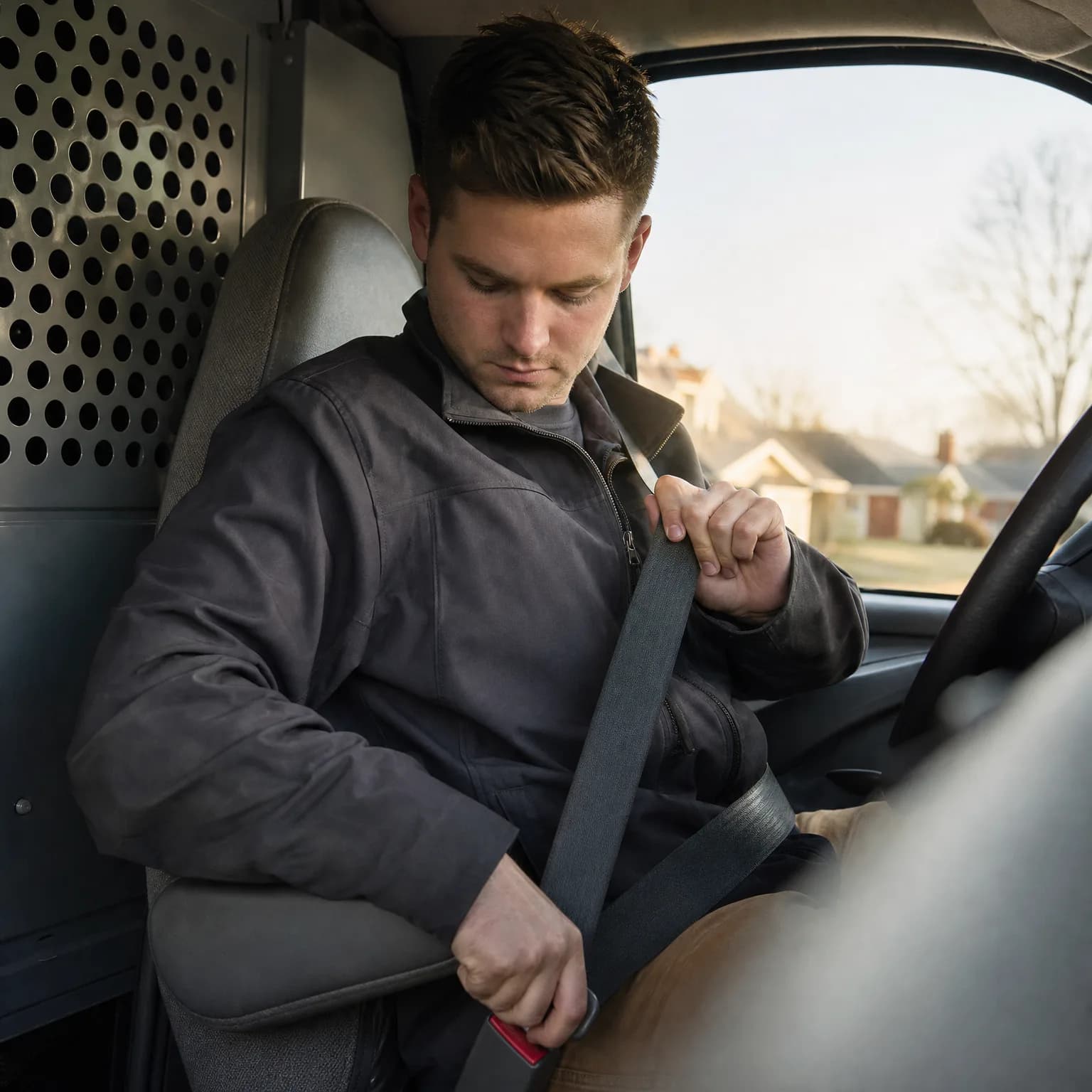
The court clearance does not trigger DMV reinstatement in California
California courts submit disposition records to the DMV, but this notification does not initiate your CDL reinstatement process. The court clearance satisfies the judicial suspension under §13352. The DMV's APS suspension under §13353 operates independently and requires separate documentation.
After your court case closes, you must file an SR-22 certificate with the DMV, complete your DUI education program, and pay the $125 reissue fee specified in Vehicle Code §14904. For first-offense DUI, California also requires ignition interlock device installation for 12 months under the statewide IID mandate (SB 1046, effective 2019). The IID requirement applies even to CDL holders who do not drive personally owned vehicles — the law does not exempt commercial drivers.
The DMV will not process your CDL reinstatement application until all four elements show active compliance: court disposition, SR-22 filing, DUI program enrollment confirmation, and IID installation verification. These four requirements have different submission processes and different verification timelines. Court disposition posts within 7-14 days of sentencing. SR-22 posts within 24-48 hours of carrier filing. DUI program enrollment confirmation can take 10-21 days depending on the program's reporting cadence. IID installation verification posts within 3-5 business days after your provider submits the installation report. If you submit all four on the same day, the DMV still processes them on independent schedules, and reinstatement eligibility does not begin until the slowest element clears.

How the 10-day APS hearing window affects CDL reinstatement timing
When you're arrested for DUI in California, the arresting officer confiscates your license and issues a pink temporary license valid for 30 days. That pink slip includes notice of your right to request a DMV administrative hearing within 10 days. This is not the same as your court arraignment date. The 10-day clock starts from the date of arrest, not conviction.
If you request the APS hearing within 10 days, the DMV stays your administrative suspension until the hearing concludes. If you win the hearing, the APS suspension is set aside entirely, though your court-imposed suspension under §13352 remains. If you lose the hearing, the suspension begins the day after the hearing decision. Missing the 10-day request window waives your hearing right, and the suspension automatically takes effect on day 30.
CDL holders who miss this deadline face a 4-month hard administrative suspension for a first offense before restricted license eligibility. Non-commercial drivers can apply for a restricted license after 30 days by installing an IID under AB 91 provisions. CDL holders cannot use restricted licenses for commercial driving — federal law prohibits it under 49 CFR 383.51. Your personal driving may qualify for a restricted license with IID installation, but your CDL remains suspended for the full APS period unless you successfully contested the hearing within the 10-day window.
This is the coordination failure most commercial drivers miss. You can complete court-ordered DUI classes, pay all fines, file SR-22, install an IID, and still be ineligible for CDL reinstatement because the DMV's administrative clock runs independently. The APS suspension does not care about your court compliance timeline.
What CDL-specific reinstatement steps California requires beyond standard DUI clearance
California does not issue restricted commercial licenses. Once your CDL is suspended, you cannot drive commercially until full reinstatement. Personal restricted licenses with IID allow limited personal driving (work commute, DUI program attendance) but explicitly exclude commercial vehicle operation.
To reinstate your CDL after clearing both court and APS suspensions, you must: submit proof of SR-22 filing (minimum 3-year coverage period from conviction date), provide IID installation verification (12-month minimum for first offense), show DUI program completion (9-month standard program for first offense, 18-month for second offense or high BAC), and pay the $125 reissue fee. California does not require CDL holders to retest for a first-offense DUI suspension, but negligent operator suspensions or multiple DUI offenses may trigger a DMV reexamination requirement including written and drive tests.
If your DUI occurred in a personal vehicle, your CDL is still suspended. Federal disqualification rules under 49 CFR 383.51 apply regardless of the vehicle you were driving at the time of the offense. A personal-vehicle DUI disqualifies your CDL for one year for a first offense, life for a second offense (though California allows reinstatement petitions after 10 years in some cases).
If your BAC was 0.04% or higher while operating a commercial vehicle, the federal disqualification is automatic and separate from California's state-level suspension. You must satisfy both state DMV reinstatement requirements and federal disqualification periods before returning to commercial driving.

Line Up Coverage Before Your License Comes Back
Get Back on the Road
How SR-22 filing timing affects your CDL reinstatement eligibility date
California requires SR-22 filing for three years from your DUI conviction date, not from your filing date. Filing early does not shorten the total period. Most carriers issue SR-22 certificates within 24 hours of payment, and the DMV receives electronic notification within 48 hours.
SR-22 filing is not proof of insurance. It is a liability certificate your carrier files with the DMV certifying you carry at least California's minimum liability limits: $15,000 per person for injury, $30,000 per accident for injury, $5,000 for property damage. If you do not own a vehicle, you need a non-owner SR-22 policy. Non-owner policies provide liability coverage when you drive vehicles you do not own — rental trucks, borrowed personal vehicles, or vehicles provided by employers for non-commercial use.
Non-owner SR-22 does not cover commercial vehicles you drive for work. Your employer's commercial auto policy covers the vehicle and your operation of it. The non-owner SR-22 satisfies California's financial responsibility requirement for your personal CDL reinstatement, not for the vehicles you drive commercially.
If your SR-22 lapses at any point during the 3-year filing period, the DMV re-suspends your license immediately. Your carrier must notify the DMV within 15 days of policy cancellation. Most carriers notify within 24-48 hours. The DMV issues a suspension notice, and reinstatement requires filing a new SR-22, paying a new $125 reissue fee, and restarting portions of the compliance verification process. A single missed payment can add 60-90 days to your total timeline.
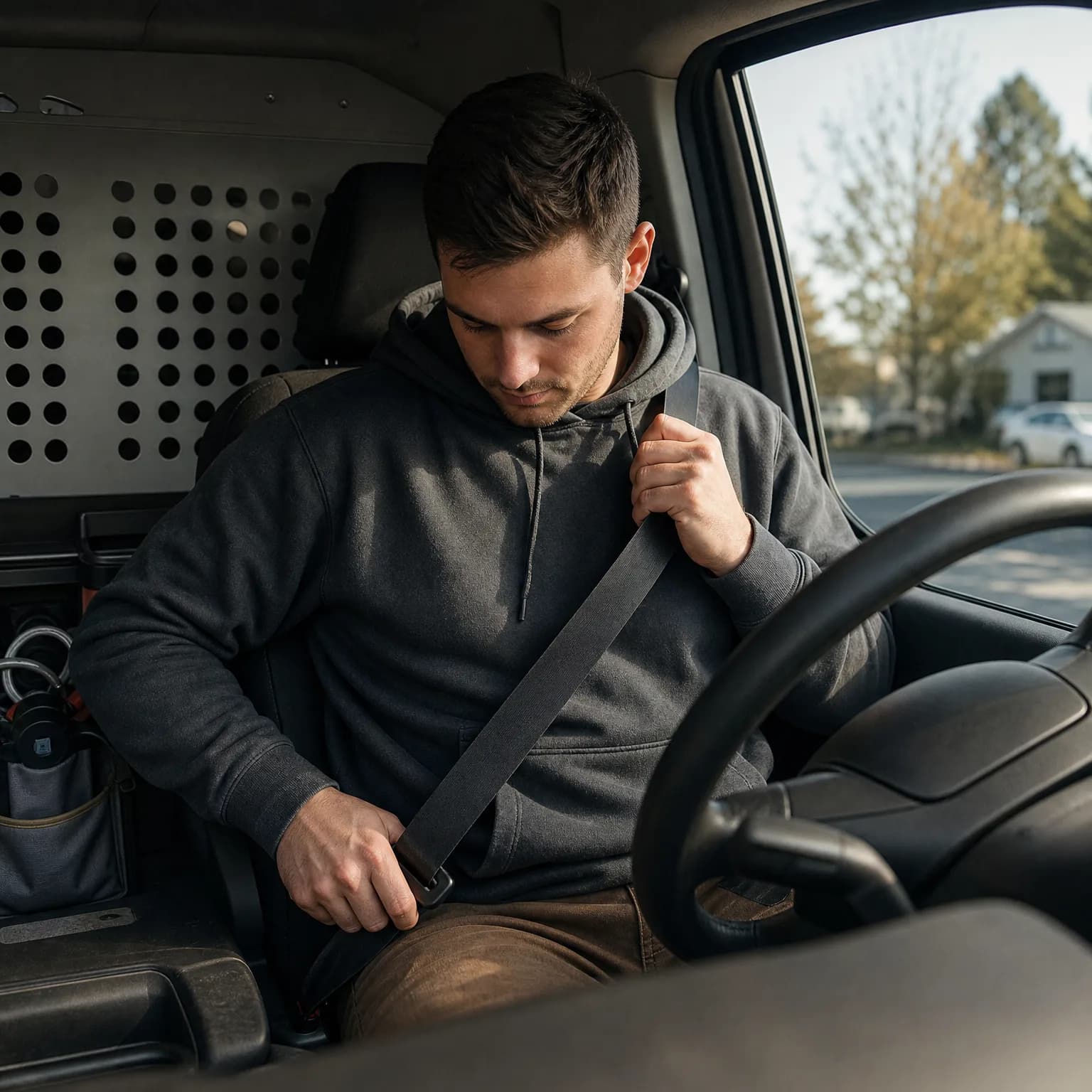
What happens if you move out of California mid-suspension or try to transfer your CDL
California's DUI suspension follows your driving record, not your residence. Moving to another state does not void the suspension. Under the Driver License Compact (DLC), 45 states share conviction and suspension data. If you apply for a CDL in another state while suspended in California, the new state's DMV will see the active California suspension and deny your application.
You cannot transfer your CDL to another state to bypass California's reinstatement requirements. Federal law requires satisfying all suspensions and disqualifications in the state where they were imposed before any state will issue or transfer a CDL. Attempting to obtain a CDL in a new state without disclosing your California suspension is fraudulent and can result in federal disqualification under 49 CFR 383.51(c).
If you establish residence in a new state during your California suspension, you must still complete California's reinstatement process before the new state will issue a CDL. This means maintaining SR-22 filing with a California-licensed carrier or a carrier authorized to file in California, completing California's DUI program requirements, and paying California's reinstatement fees. After California clears your suspension, the new state can process your CDL application under their standard transfer procedures.
Some drivers attempt to reinstate a non-commercial license in their new state while leaving the California CDL suspended. This does not work. The CDL disqualification appears on your national driving record through the Commercial Driver's License Information System (CDLIS), which all states access. Any state issuing you a non-commercial license will see the CDL disqualification and may impose additional restrictions or deny the application entirely.
Why most CDL holders need non-owner SR-22 and how it differs from commercial coverage
If you do not own a personal vehicle, you still need SR-22 coverage to satisfy California's reinstatement requirement. Non-owner SR-22 policies provide liability coverage when you drive vehicles you do not own. Monthly premiums for non-owner SR-22 after a DUI typically range from $85 to $140 in California, significantly lower than standard auto policies with SR-22 endorsements, which average $180 to $260 per month.
Non-owner SR-22 does not cover: vehicles you own, vehicles registered to household members, or commercial vehicles you drive for work. It covers personal use of borrowed or rental vehicles. If your employer provides a vehicle for non-commercial errands or allows you to drive a company car for personal use, non-owner SR-22 may cover that operation depending on the policy's specific terms.
Your employer's commercial auto liability policy covers you while operating commercial vehicles in the course of employment. That coverage does not satisfy California's SR-22 filing requirement for your personal CDL reinstatement. The SR-22 filing is tied to your individual driver record, not to the vehicles you operate commercially.
Some CDL holders assume they can skip SR-22 filing because they only drive commercially and their employer's policy provides coverage. This is incorrect. California Vehicle Code §16070 requires proof of financial responsibility tied to your driver license, not to specific vehicles. The SR-22 filing proves you carry liability coverage available for any vehicle you drive, including personal use. Without that filing, the DMV will not clear your suspension regardless of your employer's commercial coverage.
Frequently Asked Questions
Can I drive commercially in California with a restricted license after a DUI?
No. California restricted licenses with ignition interlock devices allow limited personal driving only — work commute, DUI program attendance, and essential errands. Federal law under 49 CFR 383.51 prohibits commercial vehicle operation on any restricted license. Your CDL remains fully suspended until you complete all reinstatement requirements and the DMV clears both your court and administrative suspensions.
Does my employer's commercial auto insurance satisfy California's SR-22 requirement for CDL reinstatement?
No. Your employer's commercial policy covers the vehicle and your operation of it during work. California's SR-22 filing requirement under Vehicle Code §16070 is tied to your individual driver license and must be satisfied with a personal liability policy — either a standard auto policy with SR-22 endorsement or a non-owner SR-22 policy if you do not own a vehicle. The DMV will not process your CDL reinstatement without an active SR-22 filing in your name.
How long does California require SR-22 filing after a CDL DUI conviction?
California requires SR-22 filing for three years from your conviction date, not from the date you file SR-22. If your SR-22 lapses at any point during the 3-year period, the DMV re-suspends your license immediately and you must file a new SR-22, pay a new $125 reissue fee, and restart portions of the verification process. Maintain continuous SR-22 coverage for the full 3-year period to avoid reinstatement delays.
What happens if I miss the 10-day DMV hearing request deadline after a California DUI arrest?
Missing the 10-day APS hearing request window waives your right to contest the administrative suspension. The suspension automatically takes effect 30 days after arrest and runs its full course — typically 4 months for a first offense, 1 year for a second. You cannot apply for a hearing after the 10-day deadline passes, and completing court requirements does not shorten the DMV's administrative suspension period.
Can I transfer my CDL to another state to avoid California's DUI reinstatement requirements?
No. Federal law requires satisfying all suspensions in the state where they were imposed before any other state will issue or transfer a CDL. Your California suspension appears on the national Commercial Driver's License Information System (CDLIS), which all states access. Attempting to obtain a CDL in another state without disclosing your California suspension is fraudulent and can result in federal disqualification under 49 CFR 383.51(c).
Do I need an ignition interlock device if my DUI happened in a personal vehicle and I only drive commercially?
Yes. California's statewide IID mandate under SB 1046 requires ignition interlock installation for 12 months for all first-offense DUI convictions, regardless of whether you drive personally owned vehicles. The IID requirement applies to any vehicle you drive for personal use — rental cars, borrowed vehicles, or personal errands in employer-provided vehicles. CDL holders cannot use IID-restricted licenses for commercial driving, but you must install the device to satisfy reinstatement requirements for personal driving privileges.
How long does it take the DMV to process CDL reinstatement after I submit all required documents?
California DMV processes reinstatement applications in 10-21 business days after all four required elements show active compliance: court disposition, SR-22 filing, DUI program enrollment, and IID installation verification. Each element has a different verification timeline. SR-22 posts within 24-48 hours. Court disposition posts within 7-14 days. DUI program confirmation can take 10-21 days. IID verification posts within 3-5 business days. Reinstatement eligibility does not begin until the slowest element clears.
Related Articles
CA DUI Reinstatement: Court vs DMV Timeline for Students
5/3/2026
CDL DUI Reinstatement CA: SR-22 Timing & Lapse Gaps
5/3/2026
CA CDL Reinstatement: Court Clearance vs DMV Timing
5/3/2026
CA CDL Reinstatement: Court & DMV Timing After Lapse
5/3/2026
Colorado CDL DUI: Court Clearance vs DMV Timing
5/3/2026
DC CDL DUI Reinstatement: Court & DMV Timing Gap
5/3/2026