
Alaska DUI SR-22 Filing: When Single Parents Miss the IID Window
Free to compare
Why Your SR-22 Filing Was Rejected After Court Approval
Alaska DMV will not process your SR-22 certificate of financial responsibility until your ignition interlock device provider submits installation verification to the state. This is the opposite sequence from most lower-48 states, where SR-22 filing and IID installation happen simultaneously.
Your court granted the limited license petition. Your carrier filed SR-22 the same day. But DMV's system flagged the filing as premature because no IID installation record existed in their database when the SR-22 hit their queue. The filing sits in pending status until you complete device installation and your provider—typically LifeSafer, Intoxalock, or Smart Start in Anchorage, Fairbangs, or Juneau—transmits confirmation to DMV electronically.
For single parents managing work schedules, childcare, and court-ordered obligations, this 30-45 day gap between court approval and actual driving privilege is not explained in the limited license order itself. The court's role ends with the petition decision. DMV's SR-22 and IID requirements run on separate administrative tracks under AS 28.35.030 and AS 28.15.201, and neither agency coordinates timing automatically.

The Three-Year SR-22 Filing Period Starts at Conviction, Not Installation
Alaska requires SR-22 filing for three years from your DUI conviction date, not from the date you install the ignition interlock device or receive your limited license. This distinction matters because most single parents assume the clock starts when they regain driving privileges.
If your conviction was April 2024 and you completed your 90-day mandatory hard suspension in July 2024, but did not install the IID and file SR-22 until September 2024, your three-year SR-22 obligation still ends in April 2027. The filing period is statutory and tied to the conviction, not to your compliance milestones.
Your carrier will maintain the SR-22 certificate on file with Alaska DMV continuously for that full period. If you cancel your policy, switch carriers, or allow coverage to lapse for any reason during those three years, your original carrier is required to notify DMV electronically within 10 days under Alaska's electronic verification system. DMV will suspend your license again immediately, even if you are still within your limited license period or have fully reinstated.


Single Parents in Bush Alaska Face IID Vendor Access Problems
Ignition interlock device vendors operate primarily in Anchorage, Fairbanks, and Juneau. If you live in a roadless bush community or a village accessible only by air or ferry, you face a practical compliance barrier Alaska's statutes do not address.
The court cannot waive the IID requirement under AS 28.35.030 based solely on vendor inaccessibility. Some judges in rural districts have granted limited license petitions with modified conditions when IID installation is genuinely impossible, but this is discretionary and inconsistent across Alaska's judicial districts. Most single parents in Nome, Bethel, Kotzebue, or Dillingham must travel to a hub city for installation, which adds lodging, airfare, and childcare costs aggregators never surface.
Once installed, Alaska law requires monthly calibration and data downloads. If you cannot access a certified vendor location monthly, the device will lock your vehicle after the calibration window expires. The state does not provide remote calibration options or exemptions for geographic isolation. Your limited license remains valid on paper, but your vehicle becomes inoperable until you complete the overdue calibration appointment.
Court-Defined Route Restrictions Reference Roads, Not Radii
Alaska limited license route restrictions name specific road corridors rather than mileage radii from your home. This reflects the state's non-contiguous highway infrastructure—many communities have only one road in and one road out.
Your court order might specify Glenn Highway from Mile 35 to Mile 60 for employment, Parks Highway from Wasilla to Anchorage for medical appointments, or Seward Highway between Girdwood and Anchorage for court-ordered DUI education classes. If your employer relocates, your childcare provider changes, or you accept a new job outside the approved corridor, you must petition the court again for a route modification. Driving outside approved routes, even for an emergency, constitutes a violation of your limited license terms.
Violating route restrictions triggers automatic revocation under Alaska law. You will not receive a warning. If you are stopped by Alaska State Troopers or local police outside your approved corridor, your limited license is revoked on the spot and you face additional criminal charges for driving on a revoked license. The original suspension period resumes in full, your SR-22 filing period restarts from the new conviction date, and you are ineligible to petition for another limited license for the remainder of the suspension.

Line Up Coverage Before Your License Comes Back
Get Back on the Road
How Single Parents Sequence IID Installation and SR-22 Filing Correctly
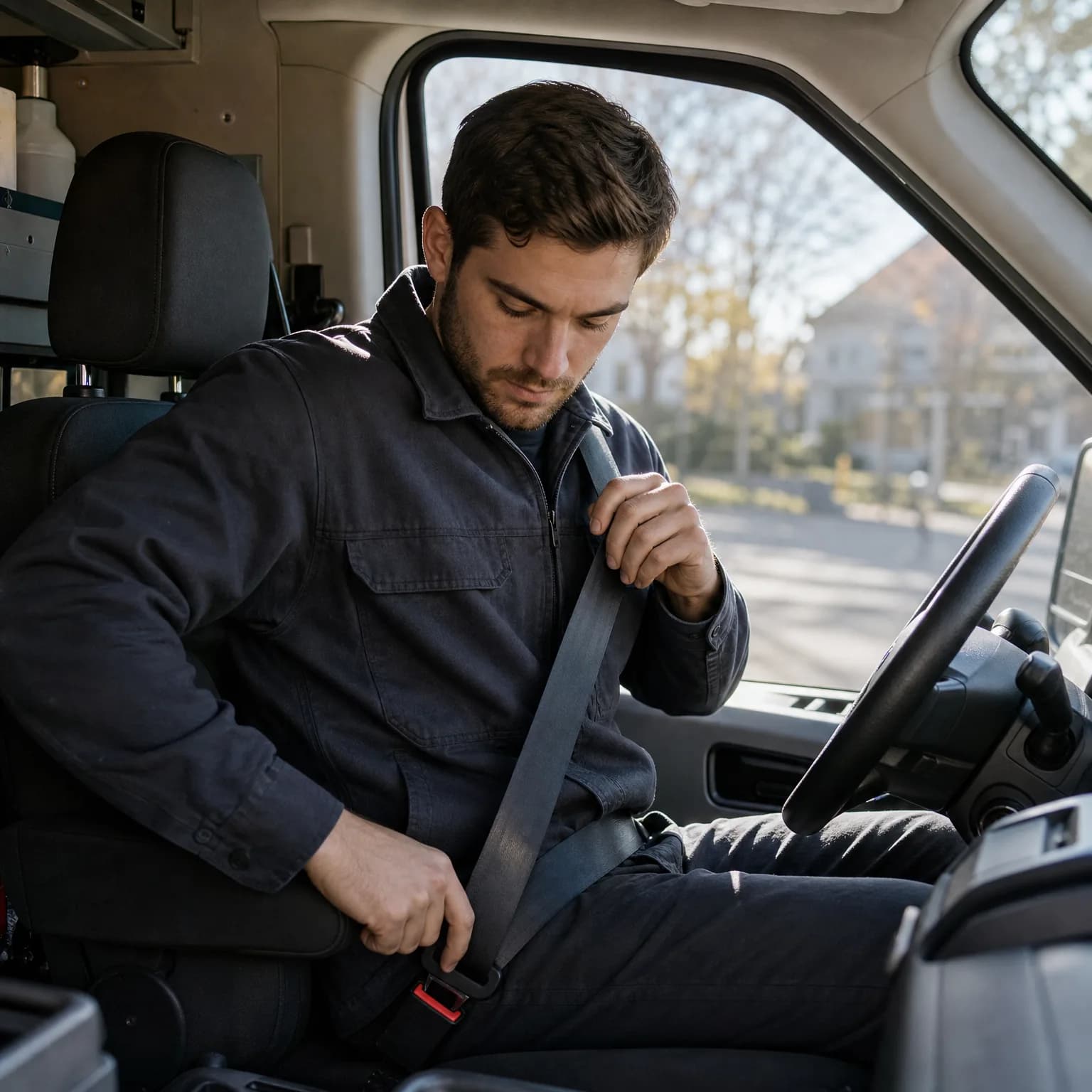
Contact an approved ignition interlock vendor immediately after your court grants the limited license petition, before calling your insurance carrier. Installation appointments in Anchorage and Fairbanks typically require 7-14 days' lead time. Installation costs run $75-$150 upfront, plus $60-$90 monthly monitoring and calibration fees for the duration of your limited license and reinstatement period.
Once the device is installed, your vendor submits electronic verification to Alaska DMV within 24-48 hours. Only after that submission posts to DMV's system should you contact your carrier to request SR-22 filing. Most Alaska carriers familiar with DUI reinstatements understand this sequence, but if you are working with a national carrier unfamiliar with Alaska-specific requirements, you may need to explain the IID-first protocol explicitly.
Your carrier will file SR-22 electronically with Alaska DMV the same day you request it, typically for a one-time filing fee of $15-$35. The SR-22 certificate itself is not a separate insurance policy—it is a certification attached to your existing liability policy confirming you carry at least Alaska's minimum required coverage: $50,000 bodily injury per person, $100,000 bodily injury per accident, and $25,000 property damage. If you do not own a vehicle, request a non-owner SR-22 policy, which provides the required liability coverage and SR-22 filing without insuring a specific car.
What Happens If Your Limited License Is Revoked Mid-Suspension
Alaska courts revoke limited licenses immediately if you miss two consecutive DUI education classes, fail to maintain SR-22 filing, drive outside approved routes or time windows, or are arrested for any new alcohol or drug-related offense. Revocation is administrative and does not require a separate hearing.
Once revoked, your original suspension period resumes in full as if the limited license never existed. If you had 6 months remaining on a 12-month suspension when you received the limited license, and it is revoked 3 months later, you now serve the original 6 months remaining plus any additional penalties from the violation that triggered revocation. You are ineligible to petition for another limited license during that resumed suspension period under Alaska court rules.
Your SR-22 filing obligation continues even during the revocation period. If you allow your policy to lapse because you assume you no longer need insurance while revoked, DMV will extend your suspension further and you will face additional reinstatement fees when you eventually become eligible. Maintain continuous SR-22 coverage from the date of your DUI conviction through the full three-year filing period, regardless of whether your driving privileges are active, suspended, limited, or revoked.
Full Reinstatement After Limited License and Suspension End
Alaska DUI reinstatement requires three separate compliance verifications: proof of completed DUI education or treatment program through an approved provider, proof of continuous SR-22 filing for the required period, and proof of ignition interlock device completion if your offense tier required installation beyond the limited license period.
The base reinstatement fee is $100, paid to Alaska DMV. If your license was physically surrendered or destroyed during suspension, add $20 for reissuance. If you owe court fines, restitution, or child support arrears, DMV will not process reinstatement until you provide clearance documentation from the court or Alaska Child Support Services Division.
DMV does not automatically notify you when your SR-22 filing period ends or when you become eligible for reinstatement. You must track your three-year filing period from your conviction date yourself. Once that period expires, contact your carrier to request SR-22 termination, then submit your reinstatement application to DMV with proof of program completion and IID removal if applicable. Processing timelines vary by DMV office location—Anchorage and Fairbanks offices typically process within 10-15 business days, but rural field offices and mail-in applications can extend that window to 30-45 days.
Frequently Asked Questions
Can I file SR-22 before installing the ignition interlock device in Alaska?
No. Alaska DMV will reject your SR-22 filing if no ignition interlock installation verification is on file when your carrier submits the certificate. You must complete IID installation and wait for your vendor to transmit confirmation to DMV before requesting SR-22 filing from your carrier.
Do I need SR-22 insurance while my Alaska license is still suspended?
Yes, if your suspension resulted from a DUI conviction. Alaska requires continuous SR-22 filing for three years from your conviction date, regardless of whether you have a limited license, are fully suspended, or have reinstated. Any lapse in SR-22 coverage during that period triggers immediate re-suspension.
What happens if I move out of Alaska during my SR-22 filing period?
Your Alaska SR-22 filing obligation does not transfer automatically to your new state. You must maintain Alaska SR-22 filing until your three-year period expires or Alaska DMV formally releases the requirement. Contact your new state's DMV to determine whether they impose separate SR-22 or insurance requirements as a condition of issuing a new license.
Can I get a limited license in Alaska if I live in a village with no ignition interlock vendor?
Alaska statute does not provide a geographic hardship exemption from the ignition interlock requirement for DUI convictions. Some rural district judges have granted modified limited licenses when IID installation is genuinely impossible, but this is discretionary and inconsistent. Most drivers in roadless communities must travel to Anchorage, Fairbanks, or Juneau for installation and monthly calibration.
How much does SR-22 insurance cost in Alaska after a DUI?
SR-22 filing adds a one-time fee of $15-$35, but your underlying liability insurance premium will increase significantly. Alaska DUI drivers typically pay $140-$240 per month for minimum liability coverage with SR-22, compared to $85-$140 per month for clean-record drivers. Rates vary by conviction count, age, location, and carrier.
Does Alaska's SR-22 filing period restart if my limited license is revoked?
No. Your SR-22 filing period is tied to your original DUI conviction date and runs for three years from that date regardless of limited license status, revocations, or additional suspensions. However, if you are convicted of a new DUI or alcohol-related offense during that period, a separate three-year SR-22 filing period begins from the new conviction date.
Can I use a non-owner SR-22 policy in Alaska if I sold my car during suspension?
Yes. Alaska accepts non-owner SR-22 policies for drivers who do not own a vehicle. A non-owner policy provides the required liability coverage and SR-22 filing without insuring a specific car, and premiums are typically $30-$60 per month lower than standard policies.
Related Articles
Alaska DUI Reinstatement: SR-22 Timing for Students
5/3/2026

Reinstate DUI License in Anchorage: SR-22 & Interlock Steps
4/29/2026

Alaska DUI SR-22 for Rideshare: IID Filing Order
5/3/2026

Alaska CDL DUI Reinstatement: SR-22 & FMCSA Timing
5/3/2026

Alaska DUI Reinstatement for Rideshare: Court-DMV Gap
5/3/2026

Alaska DUI Suspension Costs for College Students
5/3/2026