
Alaska DUI Reinstatement for Students: Court vs DMV Timing
Free to compare
Why Court Clearance Doesn't Automatically Clear Your DMV Record
Alaska operates a dual-track DUI suspension system. The court handles your criminal case and mandates treatment programs under AS 28.35.030. The DMV handles your administrative license revocation under AS 28.35.031, triggered by breath test failure or refusal. These are separate processes managed by different state agencies with no real-time data sharing.
When you complete your court-ordered alcohol information school or treatment program, the court records your compliance in its own system. The court does not push this information to the Division of Motor Vehicles automatically. You must submit proof of court compliance directly to DMV yourself, even after your case is closed.
Most college students assume their public defender or the treatment program handles this notification. Neither does. The treatment provider certifies completion to the court. The court closes your criminal case. DMV continues enforcing the administrative suspension until you separately prove to DMV that you have met all court requirements and completed any mandatory waiting periods.
The Three-Year SR-22 Filing Requirement Starts After Conviction
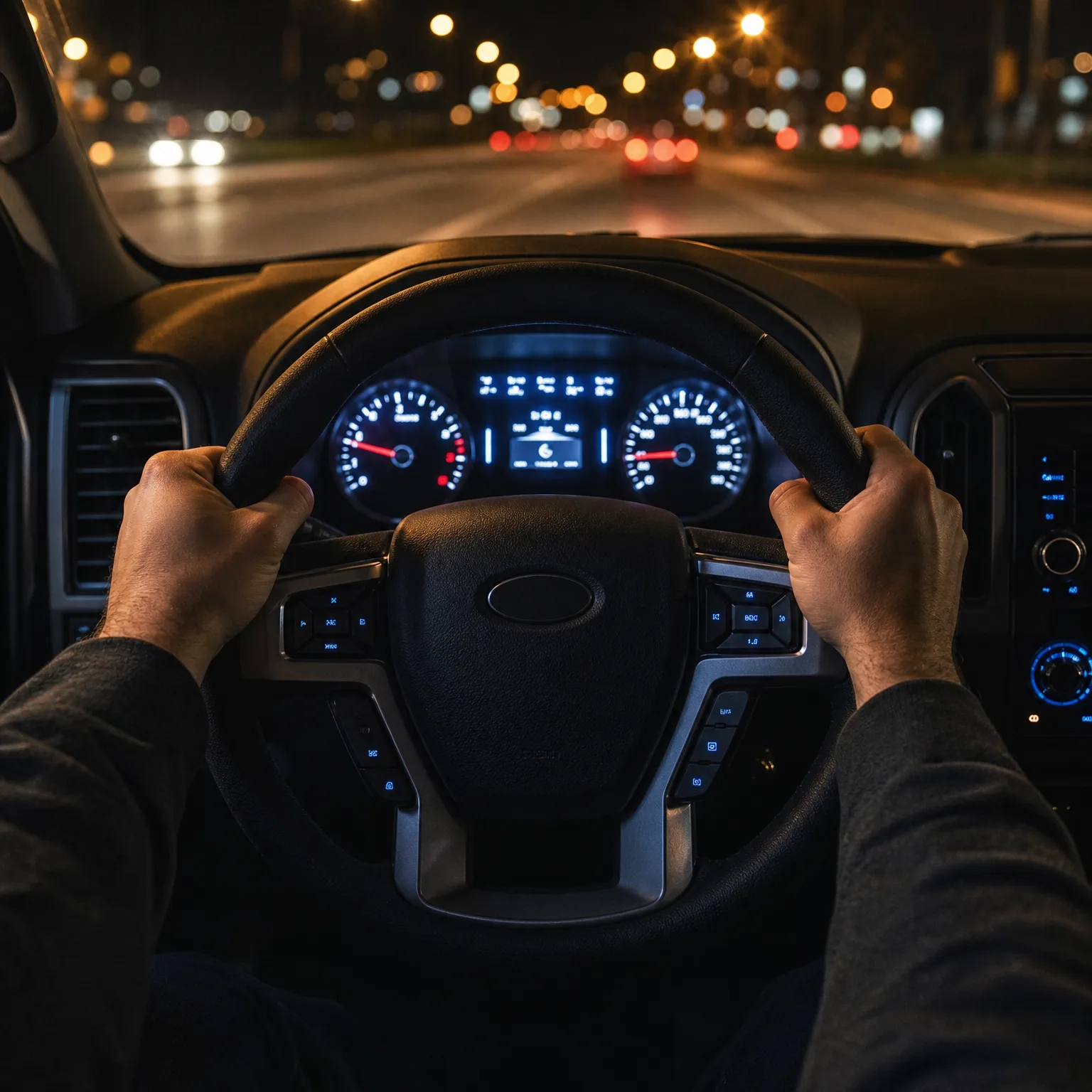
Alaska requires SR-22 certificate of financial responsibility for 3 years from your conviction date, not from the date you file it or reinstate your license. If your conviction was January 2024 and you don't reinstate until March 2025, your SR-22 filing period still ends January 2027.
You cannot file SR-22 before your ignition interlock device is installed. Alaska DMV will reject your SR-22 submission until your IID provider files installation verification with the state. This sequence matters: students often try to start the SR-22 clock early by filing before device installation, thinking it will shorten their total timeline. It does not. The filing gets rejected and you waste weeks resubmitting.
SR-22 filing costs between $15 and $35 as a one-time carrier processing fee, but the real cost is the premium increase that filing triggers. Alaska high-risk auto insurance premiums for DUI filers typically run $140–$190 per month. Over the 3-year filing period, expect total insurance costs of approximately $5,000–$6,800. Students without a vehicle should ask their carrier about non-owner SR-22 policies, which satisfy the state filing requirement without insuring a car you don't own.

Limited License Eligibility After the 90-Day Hard Suspension
First-offense DUI in Alaska requires a 90-day hard suspension under AS 28.35.030 before you can petition the court for a limited license. During those 90 days, no driving is allowed for any reason. The hard suspension is non-negotiable and begins the day your administrative revocation takes effect, which is typically 30 days after your arrest unless you request an administrative hearing.
After 90 days, you may petition the court for a limited license. Alaska calls this a Limited License, not a hardship license or work permit. The application goes through the court that handled your criminal case, not through DMV. There is no DMV administrative pathway. Expect broad judicial discretion — outcomes vary significantly by judge and district.
You must provide proof of need tied to employment, medical treatment, or education. For college students, this means documentation from your university registrar showing class schedules and campus location, and if you work, an employer affidavit stating your job location and required hours. Alaska's road network is sparse — many communities have only one road in and out. Route restrictions reference specific road corridors rather than mileage radii, which works differently than states with dense suburban grids.
Ignition Interlock Device Installation Comes Before SR-22 Filing
Alaska requires ignition interlock device installation as a condition of limited license eligibility and full reinstatement for DUI. The device must be installed and verified before DMV will accept your SR-22 filing. Students often reverse this order because other states allow simultaneous filing. Alaska does not.
IID vendors are concentrated in Anchorage, Fairbanks, and Juneau. If you attend university in a roadless bush community or a fly-in village, you face a practical compliance problem — there may be no local vendor able to service the device monthly. Remote students sometimes need to coordinate installation and calibration around travel to hub cities, which complicates limited license petitions that assume continuous device monitoring.
Installation costs typically run $75–$150, with monthly calibration and monitoring fees of $60–$90. The device stays installed for the court-ordered period, which varies by your BAC at arrest and prior conviction history. Your SR-22 filing period begins at conviction and runs independently of your IID removal date, meaning these are parallel timelines that do not automatically sync.

Line Up Coverage Before Your License Comes Back
Get Back on the Road
The $100 Reinstatement Fee and What It Does Not Cover
Alaska DMV charges a $100 base reinstatement fee once you have completed all court requirements, finished your hard suspension, maintained SR-22 filing, and kept your ignition interlock device installed for the required period. This fee reinstates your driving privilege administratively. It does not cover court fines, treatment program costs, IID vendor fees, or SR-22 insurance premiums.
The reinstatement fee applies per suspension. If you violate your limited license terms — such as driving outside approved hours or removing the IID early — your limited license is revoked and you face a new suspension cycle with a new reinstatement fee when eligible again. Most students do not realize that limited license violations restart administrative penalties separately from any new criminal charges.
Alaska accommodates remote residents through mail and online reinstatement processing. You do not need to visit a DMV field office in person if you live in a bush community. Submit proof of court compliance, IID completion certificate, and SR-22 certificate by mail to the Division of Motor Vehicles in Anchorage, along with the reinstatement fee. Processing timelines for rural submissions can extend 2–4 weeks beyond what Anchorage-area residents experience due to mail transit and staffing constraints at outlying offices.

What College Students Miss About DUI Program Completion
Alaska's court-ordered DUI programs require documented completion through an approved provider. The provider certifies to the court that you finished the required sessions. The court updates its records. Neither the provider nor the court automatically sends completion documentation to DMV.
You must obtain a completion certificate from your treatment provider and submit it to DMV as part of your reinstatement application. If you completed treatment in Fairbanks but moved to Anchorage for school, you are responsible for requesting the certificate from the original provider and forwarding it to DMV yourself. The certificate does not follow you between cities or between court and DMV systems.
Students who finish treatment in December and plan to reinstate in January for spring semester often discover in mid-January that DMV has no record of their program completion. This is not a system error. This is the expected process. The delay costs internship opportunities, off-campus housing offers that require valid licenses, and part-time jobs that assume transportation.
Getting SR-22 Coverage When You Don't Own a Vehicle
Many college students in Alaska do not own a vehicle but still need SR-22 filing to satisfy reinstatement requirements. Non-owner SR-22 policies provide liability coverage when you drive someone else's car and satisfy Alaska's SR-22 filing mandate without insuring a vehicle titled in your name.
Non-owner policies cost less than standard SR-22 coverage because they carry no collision or comprehensive exposure. Expect monthly premiums of approximately $60–$110 for minimum liability limits. Alaska requires 50/100/25 liability minimums, meaning $50,000 per person for bodily injury, $100,000 per accident for bodily injury, and $25,000 for property damage. Your non-owner policy must meet or exceed these minimums and your carrier must file the SR-22 certificate electronically with Alaska DMV.
If you later purchase a vehicle during your 3-year filing period, notify your carrier immediately. Your non-owner policy does not cover a car you own. You will need to convert to a standard auto policy with SR-22 endorsement. The filing period does not restart — it continues from your original conviction date.
Frequently Asked Questions
Can I get a limited license in Alaska before 90 days if I'm a college student?
No. Alaska law requires a 90-day hard suspension for first-offense DUI before any limited license petition is heard, regardless of student status or employment. The hard suspension is mandatory under AS 28.35.030 and begins when your administrative revocation takes effect. Courts have no discretion to waive this period.
Does completing my DUI program automatically notify Alaska DMV?
No. Your treatment provider certifies completion to the court, and the court updates its own records. Neither agency sends your completion certificate to DMV. You must submit proof of program completion directly to the Division of Motor Vehicles as part of your reinstatement application.
How long do I need SR-22 insurance after a DUI in Alaska?
Alaska requires SR-22 filing for 3 years from your conviction date. The filing period does not restart when you reinstate your license. If you were convicted in January 2024, your SR-22 requirement ends January 2027 regardless of when you actually file or reinstate.
Can I file SR-22 before getting my ignition interlock device installed?
No. Alaska DMV will reject your SR-22 filing until your IID provider submits installation verification to the state. You must install the device first, then file SR-22. Filing out of sequence wastes time and requires resubmission once the device is verified.
What happens if I violate my Alaska limited license terms?
Your limited license is revoked and you face a new administrative suspension. Violations include driving outside approved hours, using unapproved routes, or tampering with your ignition interlock device. The revocation triggers a new reinstatement cycle with separate fees and waiting periods, independent of any new criminal charges.
Do I need car insurance during my Alaska DUI suspension if I don't own a vehicle?
If your reinstatement requires SR-22 filing, yes. A non-owner SR-22 policy satisfies Alaska's filing requirement without insuring a vehicle you own. The policy provides liability coverage when you drive someone else's car and keeps your SR-22 certificate active with DMV throughout the 3-year filing period.
How do I prove I completed court requirements if I moved to a different Alaska city?
Request a completion certificate from the treatment provider where you finished your program, then submit it to DMV with your reinstatement application. Program completion records do not transfer automatically between cities or between court and DMV systems. You are responsible for obtaining and forwarding all documentation regardless of where you currently live.
Related Articles

Alaska Lapse Suspension Reinstatement for Students
5/3/2026

Alaska DUI Reinstatement for Rideshare: Court-DMV Gap
5/3/2026

Alaska CDL Reinstatement After DUI: Court & DMV Steps
5/3/2026
Alaska CDL DUI Reinstatement: SR-22 & FMCSA Timing
5/3/2026

Alaska DUI Reinstatement Timeline
7/13/2026
Alaska DUI Reinstatement: SR-22 Timing for Students
5/3/2026