
Reinstating Your License After DUI in Phoenix: Timeline & Requirements
Free to compare
Why Your SR-22 Filing Date Controls Your Entire Reinstatement Timeline
Arizona MVD begins counting your required SR-22 filing period from the date your insurer electronically submits the SR-22 certificate, not from your DUI conviction date or suspension start date. If you complete court-ordered classes, pay fines, and install an ignition interlock device before filing SR-22, those actions don't reduce your waiting period.
The state requires continuous SR-22 coverage for 12 months following a first DUI, 24 months after a second offense within 84 months, and 36 months for extreme DUI or aggravated DUI. A single day of lapsed coverage resets the clock to day zero. Most drivers lose 3-6 weeks of SR-22 credit by completing other requirements first and filing SR-22 last.
File SR-22 the same week you retain an attorney or receive your suspension notice. The MVD processes SR-22 submissions within 24-48 hours once your insurer transmits the certificate electronically. Your filing period starts that day, running concurrently with your suspension rather than after it.

What the Court Orders vs. What MVD Requires: Two Separate Tracks
The sentencing judge mandates alcohol screening, traffic survival school, substance abuse treatment, ignition interlock installation, and fines. MVD independently requires SR-22 proof of insurance, reinstatement fees ranging from $10 for administrative review to $500 for suspension plus $1,500 for traffic survival school application, and compliance verification before issuing a restricted license or reinstating full privileges.
These two tracks don't communicate automatically. MVD receives court disposition records showing conviction and sentencing, but you must request certified proof of completion for each court-ordered requirement and deliver it to MVD yourself. Most drivers assume the court sends this documentation — it does not.
Request certified completion certificates immediately after finishing traffic survival school and substance abuse treatment. MVD's Third Party Administrator processes reinstatement applications only when all court requirements show as satisfied in their system. Missing one certificate delays reinstatement by the time it takes to request, receive, and resubmit documentation, typically 2-4 weeks.


How Arizona's Ignition Interlock Requirement Affects SR-22 Timing
Arizona mandates ignition interlock devices for minimum periods: 12 months for first DUI with BAC 0.15% or higher, 12 months for first DUI with BAC under 0.15% if applying for a restricted license, 24 months for second DUI, and lifetime installation for third or subsequent DUI unless granted special ignition interlock restricted driver license review after 10 years. The device must remain installed for the full required period before MVD will grant unrestricted reinstatement.
Your SR-22 filing period and ignition interlock requirement run concurrently, not consecutively. Install the device within 30 days of your restricted license approval to avoid suspension extension. The interlock provider electronically reports installation, calibration appointments, violations, and removal to MVD in real time.
Missing a calibration appointment or attempting to remove the device early triggers immediate license re-suspension and extends your required installation period by 12 months from the violation date. SR-22 filing must continue throughout any extension period. Budget $75-125 monthly for device lease, calibration, and monitoring fees in addition to SR-22 insurance costs.

Line Up Coverage Before Your License Comes Back
Get Back on the RoadFinding SR-22 Coverage in Phoenix After DUI: Which Carriers Write High-Risk Policies
Arizona requires minimum liability limits of 25/50/15 before an insurer can file SR-22 on your behalf. Progressive, The General, Bristol West, Mendota, and Acceptance typically write DUI policies in Maricopa County. State Farm, Allstate, and USAA generally non-renew or cancel existing policies within 30-60 days of receiving DUI conviction notice from MVD.
Expect monthly premiums of $180-340 for minimum liability SR-22 coverage following first DUI, 90-150% higher than your pre-DUI rate. Second DUI policies run $280-520 monthly. Rates vary significantly based on your age, zip code within Phoenix metro, prior insurance history, and whether you own a vehicle.
If you don't currently own a car, request non-owner SR-22 coverage. This satisfies Arizona's SR-22 filing requirement at $45-85 monthly, roughly 60% less than owner policies. Non-owner coverage provides liability protection when you drive borrowed or rental vehicles but won't satisfy ignition interlock requirements if your sentence mandates device installation on any vehicle you operate.
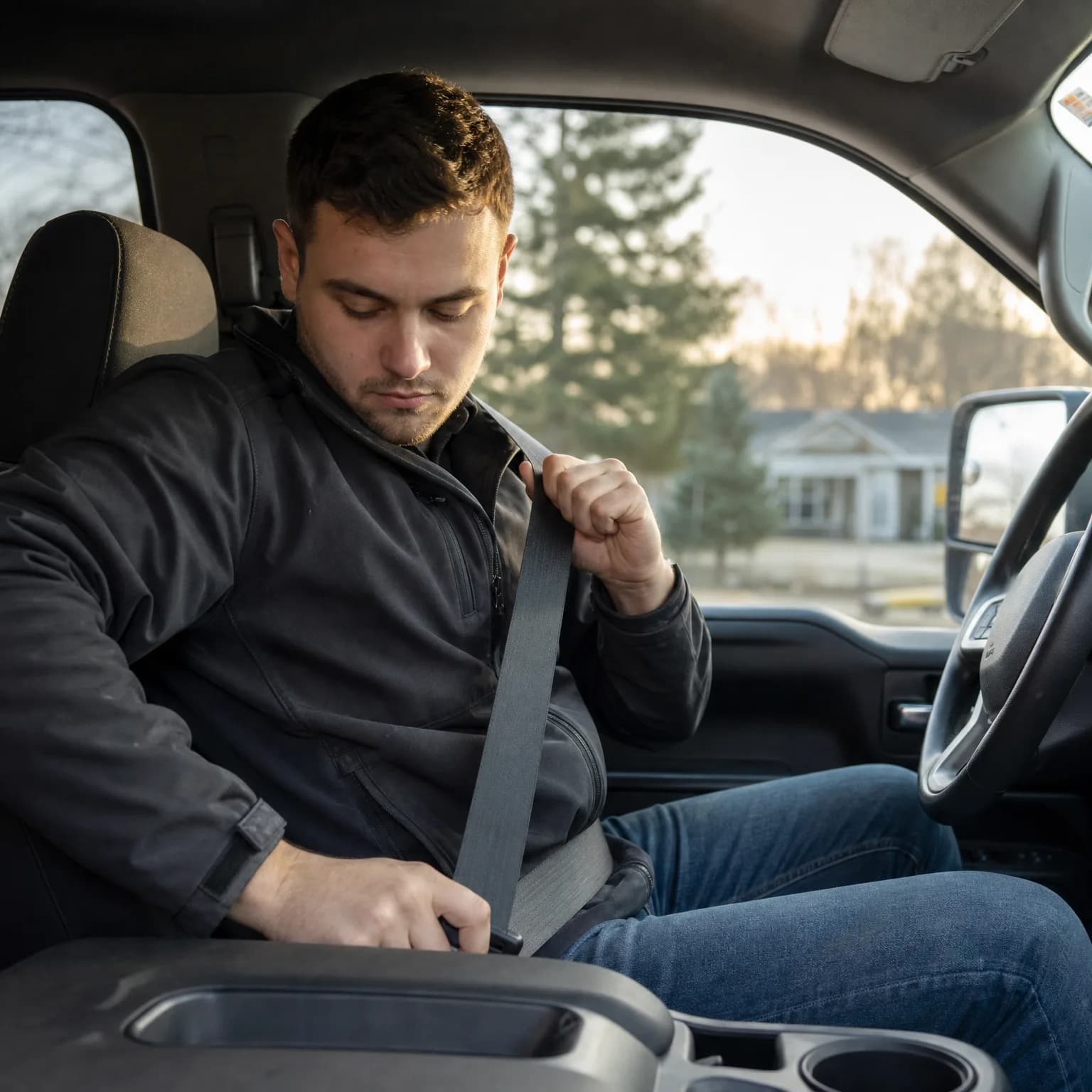
The Restricted License Application Process: When You Can Drive Again
Arizona allows restricted license applications after serving minimum suspension periods: 30 days for first DUI under 0.15% BAC, 45 days for first DUI at 0.15% or higher, 90 days for second DUI, and 12 months for aggravated DUI. You must complete alcohol screening, provide SR-22 proof, pay $500 application fee, and agree to ignition interlock installation before MVD approves restricted driving privileges.
Restricted licenses permit driving to work, school, court-ordered treatment, medical appointments, ignition interlock service appointments, and essential household duties. MVD does not define "essential household duties" precisely — enforcement depends on officer discretion during traffic stops. Driving outside approved purposes violates your restriction and triggers re-suspension plus extension of all waiting periods.
Submit your restricted license application to MVD's Third Party Administrator the day you become eligible. Processing takes 10-15 business days if your packet includes certified court completion documents, SR-22 certificate confirmation, ignition interlock installation appointment proof, and payment. Missing documentation extends processing by 2-3 weeks per missing item.

Coordinating MVD, Court, and Insurance Actions in the Correct Sequence
Week 1 after DUI arrest: retain attorney, contact SR-22 insurer to begin shopping coverage, request alcohol screening appointment. Week 2-4: complete screening, receive sentencing, purchase SR-22 policy effective immediately. Week 4-12: attend traffic survival school and complete treatment while SR-22 clock runs. Day before minimum suspension ends: submit restricted license application with all certified documents and SR-22 proof already on file.
This sequence starts your SR-22 filing period earliest, allows court requirements to proceed during suspension rather than after, and positions your restricted license application for immediate processing when you become eligible. Reversing this order — completing court requirements first, then filing SR-22 — wastes months of potential SR-22 credit.
Set calendar reminders 60 days and 30 days before your SR-22 filing period ends. Contact your insurer 45 days before expiration to confirm policy renewal. If you switch carriers during your SR-22 period, ensure the new policy begins the same day the old one ends with no gap. A single day without active SR-22 coverage resets your entire filing period to zero, regardless of how many months you already completed.
Frequently Asked Questions
Can I get a hardship license immediately after DUI in Arizona?
Arizona does not offer hardship licenses for DUI suspensions. You must serve the minimum suspension period — 30 to 90 days depending on your BAC and offense count — before applying for a restricted license. The restricted license requires SR-22 filing, ignition interlock installation, and payment of $500 application fee before MVD will approve driving privileges.
What happens if my SR-22 insurance lapses during my filing period in Arizona?
Arizona MVD receives electronic notification within 24 hours when your SR-22 policy cancels or lapses. Your license suspends immediately and your entire SR-22 filing period resets to day zero, regardless of how many months you already completed. You must purchase new SR-22 coverage, wait for your insurer to file the certificate, and begin the full 12-36 month requirement again from that new filing date.
How much does SR-22 insurance cost in Phoenix after a DUI?
Phoenix drivers pay $180-340 monthly for minimum liability SR-22 coverage after first DUI, compared to $85-140 monthly before the violation. Second DUI policies run $280-520 monthly. Non-owner SR-22 policies cost $45-85 monthly if you don't own a vehicle, though this won't satisfy ignition interlock requirements if your sentence mandates device installation.
Do I need SR-22 if I'm not driving during my Arizona suspension?
Yes. Arizona requires continuous SR-22 filing starting from your suspension date and continuing for 12-36 months depending on your offense. The filing period runs whether you drive or not. You can satisfy this with non-owner SR-22 coverage if you don't own a vehicle, but the filing requirement remains mandatory for reinstatement eligibility.
How long does Arizona require ignition interlock after DUI?
Arizona mandates 12 months for first DUI at 0.15% BAC or higher, 12 months for first DUI under 0.15% if you apply for restricted license, 24 months for second DUI within 84 months, and lifetime installation for third or subsequent DUI. Missing calibration appointments or removing the device early extends your requirement by 12 months from the violation date and triggers re-suspension.
Related Articles

Reinstate License After DUI in Scottsdale: SR-22 Timeline
4/29/2026

Mesa DUI License Reinstatement: SR-22 & Interlock Guide
4/29/2026

Reinstate License After DUI in Tucson: SR-22 & Interlock
4/29/2026

Reinstate DUI License in Gilbert: SR-22 & Interlock Steps
4/29/2026

AZ CDL DUI Reinstatement: SR-22 & IID Timing
5/3/2026

AZ DUI Reinstatement for Students: SR-22 & IID Timing
5/3/2026