
Reinstating a DUI-Suspended License in Boston: SR-22 and Interlock
Free to compare
What Massachusetts Requires Before You Can Reinstate After a DUI
Massachusetts requires three filings before reinstatement: an SR-22 certificate from your insurer, proof of ignition interlock device (IID) installation from a state-certified vendor, and clearance from the court that issued your suspension. The RMV will not process your reinstatement application until all three documents appear in their system, which means delays from any single vendor reset your entire timeline.
The SR-22 filing costs nothing beyond your premium increase, but it must remain active for the full duration set by the court — typically 3 years from your conviction date, not your reinstatement date. If your carrier cancels your policy or you let coverage lapse even one day during that period, the RMV receives an SR-26 cancellation notice within 24 hours and your license is re-suspended immediately.
The ignition interlock requirement runs parallel to SR-22 but follows a different clock. First offenders face a minimum 6-month IID requirement; second offenders face 2 years. Your IID certification must show installation before the RMV will issue a hardship license, and the device must remain installed for the full court-ordered period even after full reinstatement.

Why Your Ignition Interlock Certification Must Be Filed Before Your Hardship Hearing
Massachusetts schedules hardship license hearings through the Board of Appeal, typically 30 to 45 days after you request one. Most drivers assume they can install the interlock device after the hearing if approved. They cannot. The RMV requires proof of IID installation in your file before the hearing officer will consider your application.
State-certified IID vendors in Massachusetts include Draeger, LifeSafer, Intoxalock, and Smart Start. Installation takes 1 to 2 hours and costs $100 to $150 upfront, plus $75 to $100 per month for monitoring and calibration. The vendor files your certification electronically with the RMV within 48 hours of installation, but processing delays mean you should install at least 10 days before your scheduled hearing.
If you arrive at your hardship hearing without IID certification on file, the hearing officer will continue your case for another 30 days. That delay extends your full suspension period and pushes back your reinstatement eligibility. Install first, then request the hearing.


How to Coordinate Court Clearance and RMV Reinstatement in Boston
Your suspension originates from a court order, which means the RMV cannot reinstate your license until the court that issued the suspension confirms you have completed all sentencing requirements. In Boston, DUI cases are adjudicated in Boston Municipal Court or Suffolk Superior Court depending on charge severity. You must request a clearance letter from the clerk's office once you finish probation, alcohol education programs, community service, and any other court-mandated conditions.
Court clearance processing takes 5 to 10 business days in Suffolk County. The clerk's office mails the clearance notice directly to the RMV, but you should request a stamped copy for your records. The RMV's system updates within 3 to 5 days of receiving court clearance, but manual review delays are common. Call the RMV Contact Center at 857-368-8000 to confirm clearance appears in your record before scheduling your reinstatement appointment.
Without court clearance, the RMV will refuse your reinstatement application even if you present SR-22 and IID certifications. Clerks cannot expedite clearance letters, so start this process the day you complete your final sentencing requirement.

Line Up Coverage Before Your License Comes Back
Get Back on the RoadWhat SR-22 Insurance Costs After a DUI in Boston
A DUI conviction in Massachusetts triggers a 90% to 150% increase in your auto insurance premium. Boston drivers with a clean record prior to conviction typically pay $1,800 to $2,400 per year for minimum liability coverage after reinstatement; those with prior violations or lapses pay $3,200 to $4,800 per year. The SR-22 filing itself costs nothing, but most carriers either cancel DUI drivers outright or non-renew at the next policy term.
Fewer than 30% of standard carriers in Massachusetts will write new policies for drivers with active SR-22 requirements. GEICO, Progressive, and Plymouth Rock accept some DUI applicants depending on time since conviction and prior insurance history. Non-standard carriers including Dairyland, The General, and Bristol West write higher-risk profiles but charge 20% to 40% more than standard market rates.
If you do not own a vehicle, you need a non-owner SR-22 policy to satisfy reinstatement requirements. Non-owner policies provide liability coverage when you drive a car you do not own and cost $400 to $900 per year in Boston after a DUI. You must maintain this coverage for the full SR-22 filing period even if you never purchase a vehicle.

How Long You Must Maintain SR-22 Filing After Reinstatement
Massachusetts courts set SR-22 duration at sentencing, typically 3 years from the conviction date for first offenders and 5 years for repeat offenders. Your filing period does not pause during suspension — it runs continuously from conviction, which means part of your required filing period elapses while your license is suspended.
Your insurer must file the SR-22 certificate with the RMV before reinstatement and maintain it for the full court-ordered period. If you switch carriers during that time, your new insurer must file a new SR-22 within 24 hours of policy inception or the RMV will re-suspend your license. If your policy cancels for non-payment or any other reason, the RMV receives an SR-26 cancellation notice immediately and re-suspends your license the same day.
Once your SR-22 period ends, your insurer does not notify the RMV. You simply stop requiring the filing, and your rates begin to decline at your next renewal. Most carriers re-evaluate DUI surcharges 3 to 5 years after conviction, but the DUI remains on your Massachusetts driving record for 10 years and continues to affect your rates during that time.
What Happens If You Drive on a Hardship License in Boston
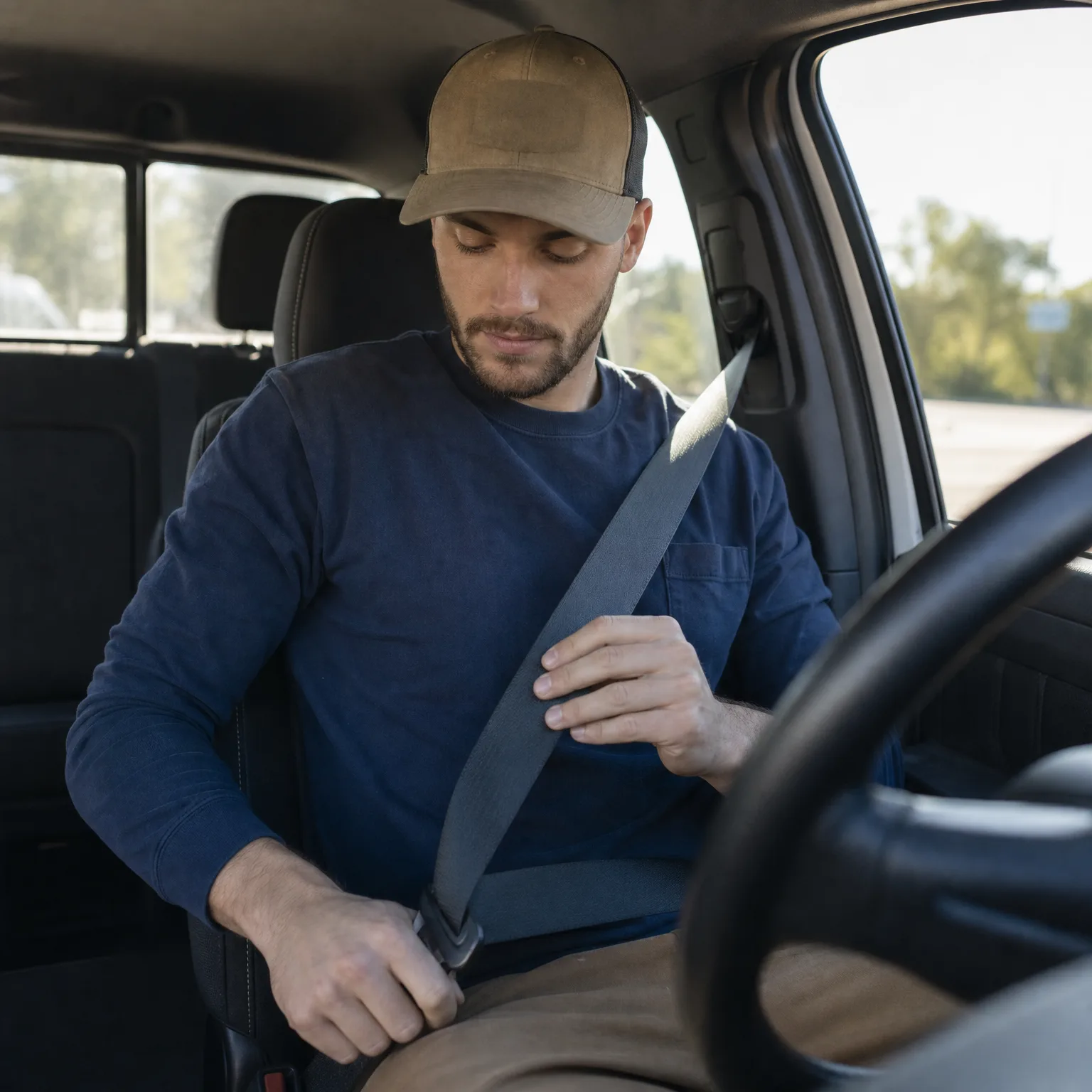
A Massachusetts hardship license allows you to drive to work, school, medical appointments, and other pre-approved destinations during specified hours. You must submit a detailed schedule with employer or school verification when you apply, and the RMV issues a license with restrictions printed on the back. Driving outside your approved times or destinations is treated as operating after suspension, a criminal offense that carries 60 days to 1 year in jail and a mandatory 1-year additional license loss.
Your ignition interlock device logs every trip, including start time, duration, and any failed breath tests. The RMV downloads this data at every calibration appointment, which occur every 30 to 60 days depending on your vendor. If the log shows driving outside your hardship restrictions, the RMV will revoke your hardship license and deny reinstatement until you serve the full original suspension period.
Hardship licenses are not automatic. The Board of Appeal denies roughly 40% of first-time applications, most often because the applicant cannot demonstrate genuine hardship or has incomplete IID or SR-22 filings. If denied, you must wait 90 days before reapplying.
Frequently Asked Questions
Can I get a hardship license in Massachusetts while my DUI suspension is active?
Yes, Massachusetts allows hardship licenses after you serve the initial mandatory suspension period — 45 to 90 days for a first offense, 2 years for a second offense. You must install an ignition interlock device and obtain SR-22 insurance before the Board of Appeal will schedule your hearing.
What happens if I miss an ignition interlock calibration appointment in Massachusetts?
Missing a calibration appointment violates your IID program terms and triggers a lockout period where your vehicle will not start. The RMV receives a violation report from your vendor, which can result in hardship license revocation and denial of full reinstatement until you complete the missed appointment and any penalty period.
Do I need SR-22 insurance if I don't own a car in Massachusetts?
Yes, if the court ordered SR-22 filing as part of your reinstatement conditions. You need a non-owner SR-22 policy, which provides liability coverage when you drive a vehicle you do not own and satisfies the RMV's proof of financial responsibility requirement.
How much does it cost to reinstate a DUI-suspended license in Massachusetts?
The RMV charges a $500 reinstatement fee for a first DUI suspension and $700 for subsequent suspensions. This does not include SR-22 insurance premiums, ignition interlock costs ($100 to $150 installation plus $75 to $100 per month), or court fines and fees.
Related Articles

MA DUI Reinstatement: SR-22 Timing for Single Parents
5/3/2026
MA OUI Reinstatement for Students: Court & RMV Timing
5/3/2026
Reinstate DUI License in Virginia Beach: SR-22 & IID
4/29/2026
MA CDL DUI Reinstatement: SR-22 Filing Timing & Lapses
5/3/2026

Mesa DUI License Reinstatement: SR-22 & Interlock Guide
4/29/2026

Reinstate DUI License Seattle: SR-22, Interlock & Court Steps
4/29/2026